
In a high-pressure city like San Jose, the right training can turn everyday stress into calm, capable leadership.
San Jose moves fast, and a lot of us feel it in very practical ways: full calendars, constant notifications, long workdays, and the quiet pressure to keep performing. In our experience, Jiu-Jitsu stands out because it builds real resilience through practice, not pep talks. You learn how to stay composed while solving problems in real time, which is a skill you can carry into work, family, and everything in between.
What makes this especially relevant in Jiu-Jitsu San Jose, CA is the mix of people who walk onto the mat. We train with professionals, parents, students, and newcomers who simply want something that strengthens both body and mindset. And while you will get fitter and more coordinated, the deeper change is often internal: better self-control, clearer decision-making, and a steadier response to pressure.
Research backs this up. Studies show consistent Brazilian Jiu-Jitsu training can reduce anxiety, hostility, and aggression while increasing confidence, life satisfaction, empathy, and emotional stability. Noticeable gains can show up in about 10 to 12 weeks for many adults, and long-term practitioners consistently score higher in resilience and self-control as experience increases.
Why resilience and leadership matter in San Jose training
Resilience is not just toughness. It is the ability to recover quickly, stay flexible, and keep thinking when something does not go your way. Leadership is not just authority. It is making good decisions under stress, communicating clearly, and adapting when the plan changes.
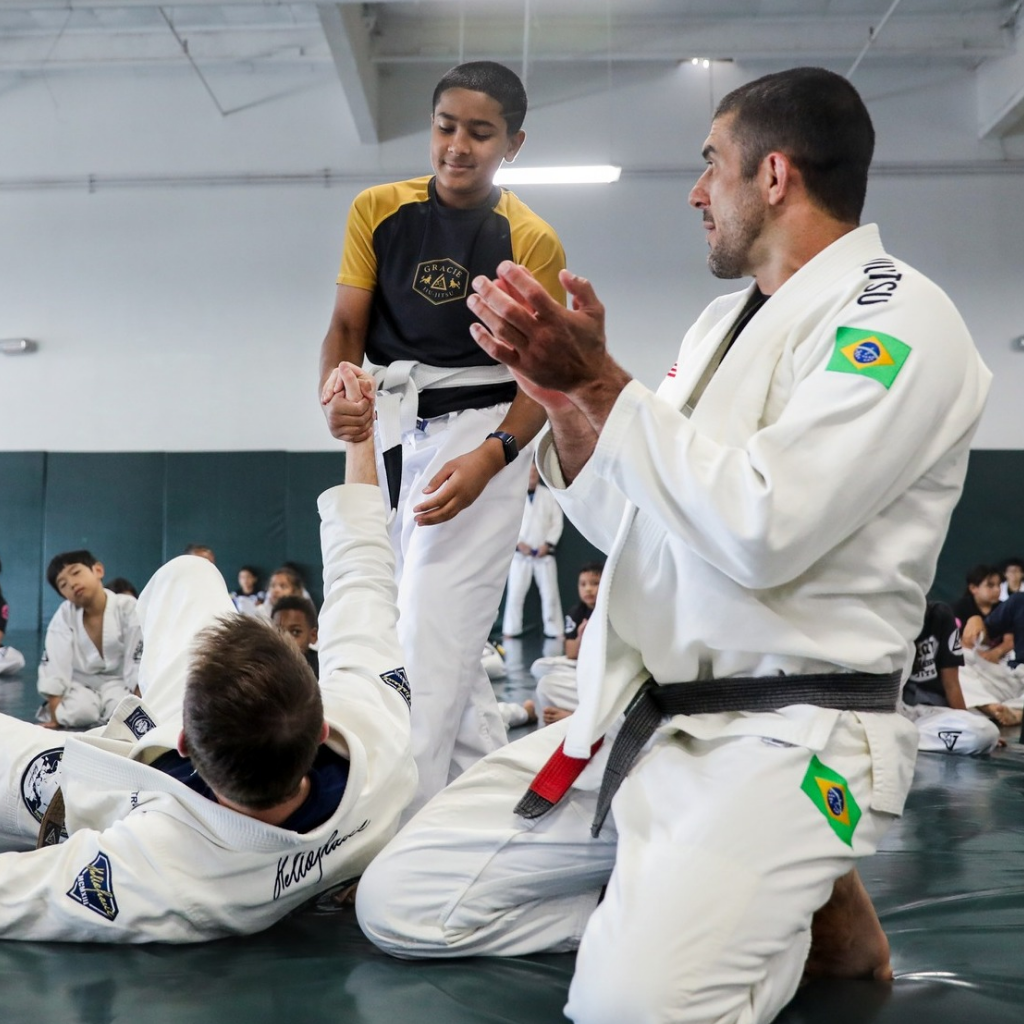
Our adult classes are built around that reality. You do not train in a vacuum. You train in a room with real humans, real constraints, and real feedback. That matters because resilience and leadership are not theoretical traits. They are behaviors you practice, mess up, and gradually improve.
In Silicon Valley culture, burnout is often treated like a private problem you solve alone. On the mat, you get a different lesson: growth happens through consistency, community, and learning how to respond when you are uncomfortable, not when you feel ready.
1. Jiu-Jitsu builds mental strength under pressure
One of the most practical ways Jiu-Jitsu builds resilience is by putting you into controlled, high-feedback situations where you have to think while tired. Sparring is not chaos in our room. It is structured practice with partners who are learning too, and it creates the kind of pressure that reveals habits quickly.
In everyday life, pressure often makes people rush, freeze, or get reactive. In training, you learn to slow down internally. You start noticing breathing, posture, grips, and timing. That shift is huge, because leadership is often the ability to stay steady while everything else speeds up.
There is also a measurable “experience effect” in the research: advanced practitioners tend to show significantly higher levels of resilience and self-control than beginners. That makes sense. The longer you practice staying calm in hard rounds, the more your nervous system learns that stress is information, not an emergency.
A simple pressure lesson you can use off the mats
When you feel overwhelmed at work or home, try borrowing a common training cue: breathe, frame, and move one step at a time. In Jiu-Jitsu terms, you are creating structure before you act. In real life terms, you are giving yourself a moment to choose a better response.
2. You develop adaptability and emotional intelligence through live problem-solving
Leadership requires reading people, not just situations. In Jiu-Jitsu, you constantly interpret small signals: where weight shifts, when tension rises, when a partner changes pace. You learn to recognize patterns quickly and adjust without taking it personally.
That is emotional intelligence in motion. You are practicing awareness, empathy, and restraint in a setting where you cannot “power through” everything. If you try to force every exchange, you usually get tired and make mistakes. Over time, you learn to use timing, leverage, and strategy instead. Those same habits show up in meetings, negotiations, and hard conversations.
We also like how Jiu-Jitsu teaches flexible planning. A good plan is useful, but attachment to the plan is risky. If you have ever led a project where requirements changed overnight, you already understand the point. On the mat, you get comfortable pivoting, and that comfort is a leadership advantage.
What adaptability looks like in a beginner-friendly class
You do not need to be athletic or “naturally coordinated” to learn this. Early on, adaptability might look like:
- Trying a technique, noticing it fails, and asking a question instead of getting frustrated
- Switching from strength to structure when you feel yourself gassing out
- Learning to reset mentally after a tough round and re-engage with focus
Those are small behaviors, but stacked over weeks, they become resilience.
3. Jiu-Jitsu reduces aggression and strengthens self-control
This is one benefit people do not always expect. From the outside, martial arts can look intense, so newcomers sometimes assume it creates more aggression. The research points in the opposite direction for consistent training: practitioners often experience lower aggression, hostility, and anxiety, along with improved emotional stability.
That matches what we see in adult training. You cannot train effectively if you are reckless. You need control to keep partners safe, and you need humility to keep learning. The social contract of the mat is simple: we help each other improve, and we protect each other while doing it.
In a city where stress can run high, self-control is not a nice extra. It is a daily tool. Jiu-Jitsu gives you a place to feel pressure, manage it, and leave with your head clearer than when you walked in.
Self-control is a leadership skill, not just a personality trait
Leaders who stay composed in tense moments are not always “born calm.” Often, calm is trained. In our room, you practice:
- Pausing before reacting
- Communicating clearly with training partners
- Accepting feedback without spiraling into self-criticism
- Taking responsibility for safety and pace
Those habits tend to transfer. You start noticing that you can tolerate discomfort longer, and you do not have to escalate when something feels challenging.
4. Confidence and focus grow fast when progress is measurable
Adults like progress you can actually track. Jiu-Jitsu is great for that because small improvements are obvious: you last a little longer, you remember the sequence, you escape a position that used to trap you, you breathe instead of panic. Those are not vague wins. You can feel them.
Recent trends in research highlight how regular martial arts training may “rewire” stress responses, with a large percentage of trainees reporting improved focus and resilience. Other surveys show most practitioners report boosted confidence and lifelong skills like discipline. You do not have to wait years to notice changes, either. Many adults feel meaningful mental shifts after 10 to 12 weeks of consistent practice.
We encourage a realistic pace, especially for beginners in Adult Jiu-Jitsu San Jose, CA. Two classes a week is enough for most people to build momentum without burning out. And because the training is low-impact compared to many striking arts, plenty of adults find it sustainable alongside desk jobs and family responsibilities.
What confidence looks like (it is quieter than people think)
The confidence you build here is not loud. It is the confidence of knowing you can learn hard things. You stop overreacting to mistakes because you make mistakes constantly in training, and you survive them. That becomes a steady kind of self-trust, which is at the core of leadership.
5. Community creates long-term resilience, not just short-term motivation
Resilience is easier to build when you are not doing it alone. One of the strongest parts of training is the community that forms through shared effort. You learn names, you start recognizing people’s styles, you celebrate small wins together, and you show up even on days you feel tired because your training partners are expecting you.
That matters in San Jose, where many adults work in high-stress roles and spend a lot of time behind screens. Community becomes a protective factor for mental health. Research trends also emphasize Jiu-Jitsu’s value for high-stress professions, including veterans and first responders, where patience, de-escalation, and reintegration into supportive routines are important.
We build our culture around safety, respect, and steady growth. When you train in an environment where people help each other improve, leadership becomes normal. You get used to being coached, and you also get used to coaching newer teammates in small, positive ways.
Ways we keep training sustainable for busy adults
If you are wondering how this fits into real life, here are a few practical approaches we use with new students:
- Start with a consistent schedule you can keep, even if it is just two days a week
- Focus on fundamentals first so you feel safer and more confident during live drills
- Communicate with partners about pace and experience level so rounds stay productive
- Treat recovery as part of training, including sleep and mobility work
- Track small wins weekly, not perfect performance daily
Those details sound simple, but they are exactly how resilience is built: through repeatable habits.
How to spot resilience and leadership progress in your first 90 days
If you like having a roadmap, this is a helpful way to think about the early phase. Progress rarely feels linear, but patterns show up when you zoom out.
1. Weeks 1 to 4: You learn the room, the etiquette, and basic positions, and your main win is showing up consistently.
2. Weeks 5 to 8: You start recognizing problems earlier, your breathing improves, and you recover faster after tough rounds.
3. Weeks 9 to 12: You make calmer decisions under pressure, you communicate more confidently with partners, and you notice stress outside the gym feels more manageable.
This is also where many people report the biggest mental shift: not because everything is suddenly easy, but because you have proof you can handle hard things.
Take the Next Step
Building resilience and leadership is not a theory project. It is a practice, and Jiu-Jitsu gives you a structured way to work on it in a supportive room with clear standards and real feedback. If you live or work in San Jose and want skills that carry into meetings, family life, and stressful seasons, we have built our adult training to be challenging, safe, and sustainable.
When you are ready, we would be glad to help you start at Gracie Jiu-Jitsu San Jose with a plan that fits your schedule and your comfort level, whether your goal is stress management, self-defense, or simply becoming harder to shake when life gets hectic.
Experience how Jiu-Jitsu builds discipline and resilience by joining a class at Gracie Jiu-Jitsu San Jose.