
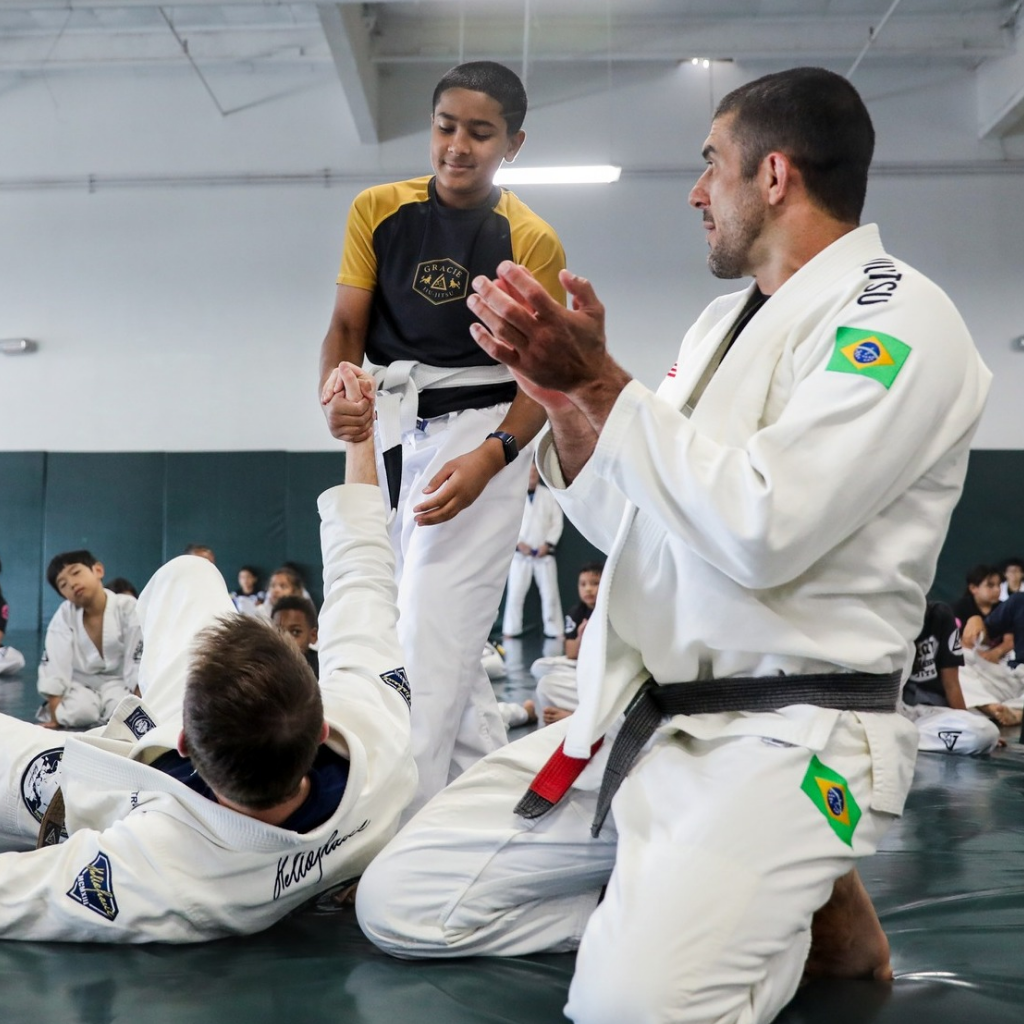
Jiu-Jitsu gives you a clear, step-by-step path from day one so you can feel progress fast without feeling thrown into the deep end.
Starting something new can feel like a lot, especially when it is a martial art and you are not sure what a first class actually looks like. We meet beginners in San Jose every week who want practical skills, a better routine, and a place to train where the learning process is clear. Jiu-Jitsu works well for that because progress is measurable: positions, escapes, control, and timing all build in layers.
In our beginner-friendly environment, you do not need to be tough, flexible, or “in shape” to start. You just need a willingness to learn, show up consistently, and let the basics do their job. Over time, those basics translate into real strength, better focus under pressure, and the kind of resilience that carries over into work, school, and everyday life.
This guide breaks down what you can expect as a beginner training Jiu-Jitsu in San Jose, CA, how our programs are structured, and how to start in a way that feels safe and realistic.
Why Jiu-Jitsu is a smart starting point for San Jose beginners
Jiu-Jitsu is often described as technique over strength, but we like to be more specific: technique helps you use your strength efficiently. That is a big reason beginners tend to stick with it once they see the “lightbulb” moments happen. You learn how to create leverage, how to manage distance, and how to stay composed when things feel chaotic.
For San Jose beginners, that matters because most of us already have enough chaos. Training becomes a structured hour where the goal is simple: practice a small set of skills, get coached, and leave feeling like you learned something real. Even on a low-energy day, you can show up and work on clean fundamentals.
Jiu-Jitsu also scales. If you want a steady pace, we keep it steady. If you want to challenge yourself, there is plenty of room to do that safely as your foundation improves.
What you will actually do in your first few classes
A common worry is that beginners will walk into class and immediately be asked to spar at full speed. Our approach is more organized than that. We focus on a cooperative learning environment first, because you cannot build confidence on top of confusion.
In the early phase, you will spend most of your time learning how to move and how to stay safe in the most common scenarios: controlling distance, maintaining balance, and understanding what “good position” means. We coach details that feel small at first, like where your knees go, what your hands should be doing, and how to breathe when you are working.
As you repeat those patterns, your body starts to understand them without you having to overthink every step. That is when beginners usually notice a shift: you feel less rushed, you make better decisions, and you stop burning energy on movements that do not help.
The beginner curriculum: simple, structured, and built for progress
Beginners do best when the roadmap is clear. We use a structured curriculum designed to teach core techniques in a way that builds on itself. Instead of random moves, you learn connected skills that solve predictable problems.
Here is what that structure does for you:
• You get repeatable practice, so skills stick instead of disappearing by the next class
• You learn the “why” behind positions and escapes, not just the steps
• You can track progress because the techniques and goals are consistent
• You reduce injury risk because we keep intensity appropriate for your experience level
• You build confidence through clean reps before adding pressure and speed
This kind of approach is especially helpful if you are the type of person who likes clarity. You will know what you are working on and why it matters.
Building real strength without “gym tough” pressure
A lot of people come in saying they want to get stronger, but what they really mean is they want useful strength. Jiu-Jitsu builds strength in a way that feels practical: grip strength, hip strength, core stability, and the ability to hold posture when you are tired.
You also build what we call “durable strength.” That is the strength that shows up in awkward positions, when you are off-balance, or when you need to control your own body weight smoothly. It is not just about lifting more. It is about moving better.
And yes, you will get sweaty. Some days your forearms will feel like they worked harder than you expected. That is normal. We guide you so the workload grows with your skill, not with your ego.
Focus: why training makes your mind feel quieter
One of the underrated benefits of Jiu-Jitsu is how quickly it demands your attention. When you are practicing a technique, you cannot scroll, multitask, or half-listen. You are there, fully present, because the details matter.
Over time, that presence becomes a skill. Beginners often notice that after class, their mind feels calmer. Problems do not vanish, but you feel more capable of handling them. Training becomes a reset button, and it is a productive one because you are learning while you reset.
We also coach focus in a practical way. We do not just tell you to concentrate. We give you simple priorities during drills so you know what to pay attention to first, second, and third.
Resilience: learning to stay calm when it gets uncomfortable
Resilience is not about being fearless. It is about staying functional when something is hard. Jiu-Jitsu builds that through controlled discomfort, the kind that is challenging but safe.
As a beginner, you learn what it feels like to be in a pinned position and how to work your way out with timing and technique. You learn that “stuck” is often temporary if you keep making good decisions. That lesson shows up in daily life more than people expect.
Resilience also comes from consistency. You learn to show up even when you are tired, even when the week is busy, even when you do not feel like you are improving fast enough. Then one day you realize you handled a situation smoothly that would have overwhelmed you earlier. It is a quiet win, but it is a real one.
Safety for beginners: how we keep training smart
Safety is not an afterthought for us. It is built into how we teach, how we pair students, and how we set expectations on the mat. Beginners should feel challenged, not crushed.
We emphasize controlled training, clear tapping rules, and steady progression. If something feels off, we want you to say so. Learning to communicate in training is part of being a good training partner and part of staying healthy long term.
A few practical safety habits we reinforce early:
1. Tap early and tap clearly, then reset without embarrassment
2. Focus on technique over speed, especially while learning the mechanics
3. Keep movements controlled so you protect your partner and yourself
4. Ask questions when you are unsure rather than guessing at full intensity
5. Take rest rounds when you need them, because recovery is part of training
This is how you build skill and confidence without collecting avoidable injuries.
Adults, teens, and Youth Jiu-Jitsu San Jose, CA families: finding the right fit
Beginners come in with different goals and different schedules. Some adults want stress relief and fitness. Some want practical self-defense skills. Some want a hobby that feels meaningful and social without being a “scene.”
We also work with families who are looking for Youth Jiu-Jitsu San Jose, CA options that teach discipline, focus, and respectful behavior, not just moves. For kids and teens, the benefits are often very visible: better body awareness, better listening skills, and a healthier relationship with challenge. Training gives young students a place to practice handling frustration and bouncing back, which is a life skill, not just a sport skill.
No matter your age, we keep the learning process progressive. The goal is the same: build fundamentals first, then build performance on top of them.
What membership and training consistency can look like
We keep the pathway simple: start with fundamentals, build consistency, and then expand. Most beginners do well training a few times a week, but the “right” schedule is the one you can maintain.
If you are balancing work, school, or family, we encourage you to choose a pace that keeps training enjoyable. Consistency beats intensity. A steady plan for months will outperform a burst of motivation for two weeks.
On the website, you can review the program details and the class schedule to map out realistic training times. If you are not sure where to begin, we help you pick a starting point based on your goals and comfort level.
How Jiu-Jitsu in San Jose, CA fits into real life, not an ideal life
Most beginners are not trying to become professional athletes. You want training that fits into your week, helps you feel better, and gives you skills you can trust. That is exactly where Jiu-Jitsu San Jose, CA beginners tend to thrive: the practice is practical, the progress is trackable, and the benefits show up outside the gym.
You may notice changes in small moments first. Your posture improves. You breathe better under stress. You feel less reactive. Then the bigger changes arrive: improved conditioning, better self-confidence, and a stronger sense that you can handle hard things.
We train for the person you are today, not the person you think you need to be before you start.
Ready to Begin
If you want a beginner-friendly way to learn Jiu-Jitsu while building strength, focus, and resilience, we are ready to guide you step by step. Our structure keeps training clear, our coaching keeps it safe, and our community keeps it consistent even when your week gets busy.
When you are ready to start, we will help you choose the right entry point and a schedule you can actually maintain. That is how real progress happens at Gracie Jiu-Jitsu San Jose, and it is why so many beginners in San Jose stick with the process once they experience it.
Strengthen both your body and mind through consistent Jiu-Jitsu training at Gracie Jiu-Jitsu San Jose.