
The right Jiu-Jitsu training turns everyday stress into focus and transforms workouts into real, usable strength.
Most people start training because they want to feel stronger, but the best kind of strength is the kind you can actually use. In our Jiu-Jitsu classes, we build that practical strength through a mix of movement, leverage, timing, and calm decision-making under pressure. You do not have to be in shape before you begin, either. Training is the conditioning.
Here in San Jose, life moves fast. You might sit for long hours, bounce between work and family, or just feel mentally maxed out by the end of the day. Our approach is simple: we teach proven techniques in a structured way, and we help you develop a body that moves better and a mind that stays sharper when things get uncomfortable.
If you are searching for Jiu-Jitsu San Jose, CA options because you want fitness, self-defense, or a healthier mental reset, this guide breaks down the techniques and training methods that build both physical power and mental resilience, without turning it into a complicated science project.
Why Jiu-Jitsu Builds Real Strength Instead of Just Gym Strength
A lot of workouts make you tired. Jiu-Jitsu makes you capable. The difference is that our training develops strength through positions you actually have to control: holding top pressure, keeping posture inside someone’s guard, standing up safely, and escaping when you are pinned.
Physically, you build muscular endurance, cardiovascular capacity, flexibility, agility, and coordination in nearly every class. Drilling patterns teach your body to repeat efficient movements. Positional training forces your core, hips, and grip to work in ways a treadmill never will. And controlled sparring adds a layer of intensity that makes your conditioning feel honest, because you are responding to another person, not a timer.
Mentally, Jiu-Jitsu asks for attention to detail. A small grip change can decide whether you sweep or get swept. A rushed decision can give up a better position. Over time, you get used to staying calm, observing, and choosing the next step with purpose.
The Mind Body Connection: How Technique Trains Your Nervous System
When we teach technique, we are not only teaching moves. We are teaching you how to manage stress with structure. That is one reason people often report feeling clearer after class, even when they are physically exhausted.
You learn to breathe when someone is putting pressure on you. You learn to frame, recover guard, and make space instead of panicking. That habit carries over into everyday life in San Jose, whether it is work deadlines, traffic, or just the normal chaos of a busy week.
In class, the “chess” side of the art shows up quickly. You are always solving small problems: Where is the underhook, what is the angle, where should your hips be, what happens if your partner posts. That problem-solving becomes a form of mental conditioning, and it is surprisingly addictive once it clicks.
Foundational Techniques That Build Strength Fast
The fastest improvements usually come from mastering foundations. Fancy techniques are fun, but fundamentals are where you build posture, base, balance, and confidence. These are the core skill areas we emphasize because they translate to both fitness and real-world self-defense.
1) Escapes: The Strength of Staying Calm Under Pressure
Escapes are where most beginners feel the biggest mental win. Being pinned can feel heavy and discouraging at first. Then you learn a structured escape, and suddenly the pressure feels manageable.
Common escape themes we train include:
- Framing with your forearms to protect your neck and create space
- Hip movement and bridging to disrupt your partner’s base
- Shrimping to recover guard or get to your side
- Building to a safer position before trying to stand
This develops core strength, hip power, and endurance, but the bigger change is mental. You learn that bad positions are solvable. That mindset shows up everywhere.
2) Guard Retention: Building Hip Mobility and Defensive Confidence
Guard retention is the ability to keep someone from passing your legs and flattening you out. It is a skill that rewards timing and flexibility more than raw power, which is good news for beginners who are not trying to “muscle” their way through training.
Guard retention also builds strong hip flexors, hamstrings, and core endurance. You are constantly pummeling your legs inside, tracking distance, and re-establishing frames. Over time, you move better in daily life because your hips stop feeling like they are made of concrete.
3) Sweeps: Turning Defense Into Offense
Sweeps teach you how to reverse position using leverage and timing. They are also great for conditioning because they require coordinated effort from your legs, hips, and upper body.
A good sweep feels almost unfair, in a good way. You are not lifting someone. You are tipping them because your angle, grips, and timing line up. That is the heart of Jiu-Jitsu: maximum effect with efficient effort.
4) Top Control: Pressure, Balance, and “Quiet Strength”
Top control is where you learn to apply steady pressure without burning energy. This is not about being heavy for the sake of it. It is about controlling space, blocking movement, and staying balanced when your partner tries to escape.
Technically, top control builds:
- Shoulder and chest endurance from posting and framing
- Core stability from maintaining base
- Grip strength from controlling wrists, collars, or head position
Mentally, it develops patience. You learn not to rush. You learn to cook a position slowly, improving step by step.
5) Takedown and Clinch Fundamentals: Athleticism You Can Feel
Even if your first goal is fitness, learning basic takedown entries and clinch concepts boosts coordination and leg drive. It also teaches you how to close distance safely, how to break posture, and how to keep your balance when someone is resisting.
We keep training controlled and progressive, especially for newer students. The point is not to slam into the ground. The point is to build real skill and body awareness, with safety leading the way.
Submissions That Develop Precision, Not Ego
Submissions are part of Jiu-Jitsu, but we treat them as a lesson in precision and control. A clean submission is not a brawl. It is proper positioning, correct leverage, and good timing, with your partner’s safety always in mind.
In our training, you learn to focus on the steps that make submissions work:
- Secure position before you attack
- Control the head, hips, or shoulders so escapes are harder
- Apply pressure gradually so your partner can tap safely
- Reset and learn rather than “win” a round
That approach builds trust on the mat, and it also keeps you improving longer because you are not constantly training injured.
How Our Certified Self-Defense Program Builds Usable Strength
Some people want competition skills. Many people want self-defense that makes sense for real life. Our certified self-defense program is designed to turn fitness into everyday strength you can rely on, not just something that looks good on a mirror selfie.
We teach you how to manage distance, posture, and common grips. We also train you to make simple choices under pressure, because in real life, complexity breaks down fast. You will still get a great workout, but the workout is attached to purpose.
This is also why you do not need prior fitness to start. The program begins with fundamentals and builds progressively. If you can show up, we can help you improve. Consistency matters more than athletic background.
What You Will Feel Changing in Your Body After a Few Months
Progress in Jiu-Jitsu shows up in small, satisfying ways. One day you realize your grip is stronger because you can hold a position without shaking. Another day you notice you can climb stairs without feeling winded. Your shoulders sit a little better. Your hips open up. You start moving like your body remembers it is supposed to move.
Common physical changes our students notice include:
- Better cardio from live rounds and structured drilling
- Stronger core and hips from guard work and escapes
- Increased flexibility from repeated movement patterns
- More stable joints and balance from top control and base training
- Practical strength that shows up in daily tasks, not just workouts
It is not instant, and it is not magic. It is just what happens when you train a full-body skill consistently.
Mental Strength: Focus, Stress Relief, and Decision Making Under Pressure
Jiu-Jitsu gives your mind a single job: solve the problem in front of you. That kind of focus is rare. Phones disappear. To-do lists quiet down. You are present because you have to be.
Over time, you build a calm response to pressure. You get used to being uncomfortable without spiraling. You learn to accept small setbacks and keep working. That is mental resilience, and it is one of the biggest benefits people do not expect when they start.
We also like that progress is measurable. You can feel when a technique becomes more efficient. You can tell when your breathing improves. Even your decision-making becomes cleaner. You stop forcing things, and you start setting them up.
Youth Training: Building Strong, Confident Movement in a Safe Structure
Families searching for Youth Jiu-Jitsu San Jose, CA are usually looking for a few things at once: confidence, discipline, physical activity, and a safe environment. We take that seriously.
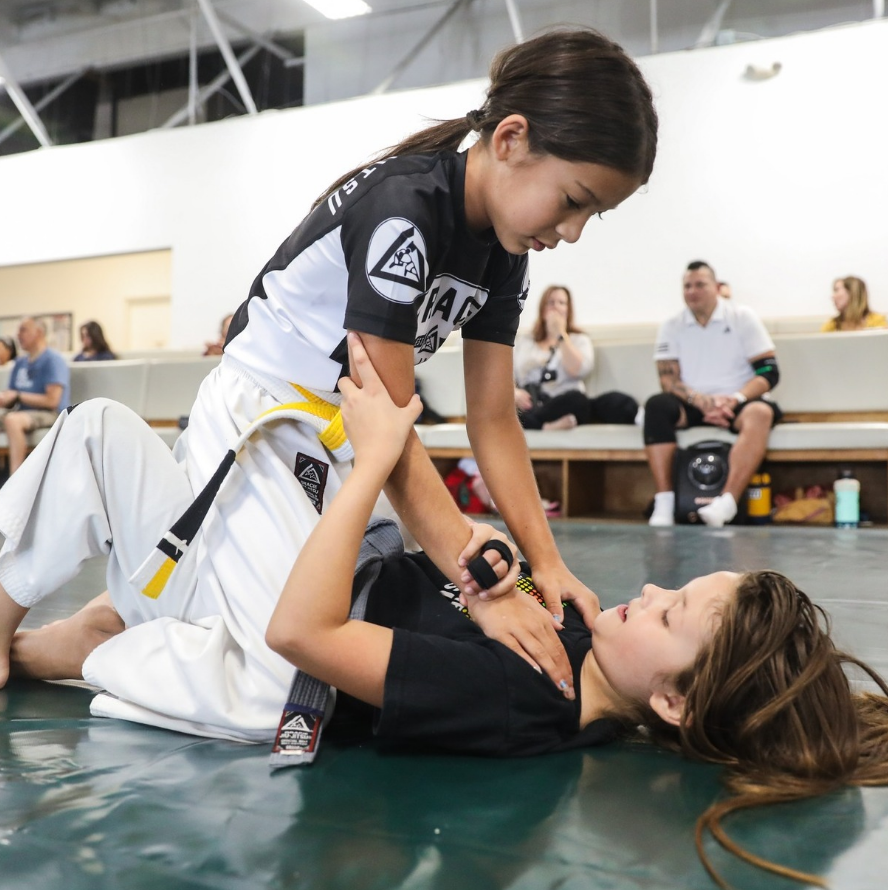
Our youth program focuses on age-appropriate skill development, structure, and positive coaching. Kids learn body control, balance, and coordination, along with respectful partner training. The goal is not to turn class into chaos or to push kids into intense sparring too early. The goal is steady progress, strong basics, and confidence that feels earned.
For many kids, the benefits show up in posture, attention, and the ability to stay composed when something feels hard. That is a life skill, not just a sports skill.
How to Start Without Overthinking It
Getting started tends to feel bigger in your head than it is in real life. You do not need perfect fitness. You do not need to memorize techniques from videos. You just need to show up and train in a structured environment.
Here is the simplest way to approach your first few weeks:
1. Pick a realistic weekly schedule you can stick to, even if it is just two classes
2. Focus on survival skills first: posture, frames, escapes, and guard recovery
3. Ask questions after class so we can help you fix small details early
4. Train with control and consistency rather than trying to “win” rounds
5. Track progress by what you can repeat reliably, not by how tough you feel
If you stay consistent, your strength and confidence will follow. That part is pretty predictable.
Take the Next Step
Building mind and body strength through Jiu-Jitsu comes down to a few essentials: fundamentals that work, a training structure that keeps you safe, and a community that supports steady progress. When you train with a certified self-defense curriculum, you are not just getting fitter, you are building usable strength that holds up outside the gym, too.
That is exactly what we deliver at Gracie Jiu-Jitsu San Jose. If you are in San Jose and want training that improves endurance, mobility, and mental sharpness in the same hour, we are ready to guide you from day one, whether you are brand new or returning with experience.
Build stronger grappling skills and refine your technique by joining a Jiu-Jitsu program at Gracie Jiu-Jitsu San Jose.