
Jiu-Jitsu gives you a way to stay calm, get control, and create a safe exit when real life gets unpredictable.
If you live in San Jose, you already know the city is full-speed most days: crowded parking lots, busy sidewalks, late-night errands, and the kind of everyday stress that can make any situation feel closer than it should. When people start looking for real-world self-defense, most are not searching for a hobby. You want something practical that actually holds up under pressure, and you want training that feels grounded in reality.
That’s exactly why we focus so heavily on Jiu-Jitsu. It’s a system built around leverage, timing, and positional control, which means you’re not relying on being bigger, younger, or more aggressive than someone else. Instead, you’re learning how to manage distance, protect yourself, and make smart choices when things get messy.
We also see something else happen a lot: people show up wanting self-defense, then stay because the training changes how they carry themselves. You move differently. You breathe differently. You start noticing your options. And in self-defense, options are everything.
What Makes Jiu-Jitsu So Effective Outside the Gym
Self-defense is not a highlight reel. Most real situations are awkward, fast, and uncomfortable. Jiu-Jitsu prepares you for that because it’s designed around common realities: someone grabs you, closes distance, pushes you into a wall, or ends up on top of you. Our training doesn’t assume a clean, perfect stance or a polite amount of space.
A major reason Jiu-Jitsu works is that it teaches you how to control someone without needing to injure them severely. That matters in the real world. If you can stabilize a situation, create space, and disengage safely, you’ve done the job. Joint locks and chokes can be applied with control, and that control is a big part of responsible training.
From a credibility standpoint, Jiu-Jitsu is also widely adopted. Estimates put participation at about 2.9 million practitioners worldwide, including roughly 324,000 in the United States. You don’t need those numbers to believe in the art, but it’s a good signal that a lot of people have tested this training and decided it’s worth sticking with.
Why Grappling Skills Matter in Real-World Self-Defense
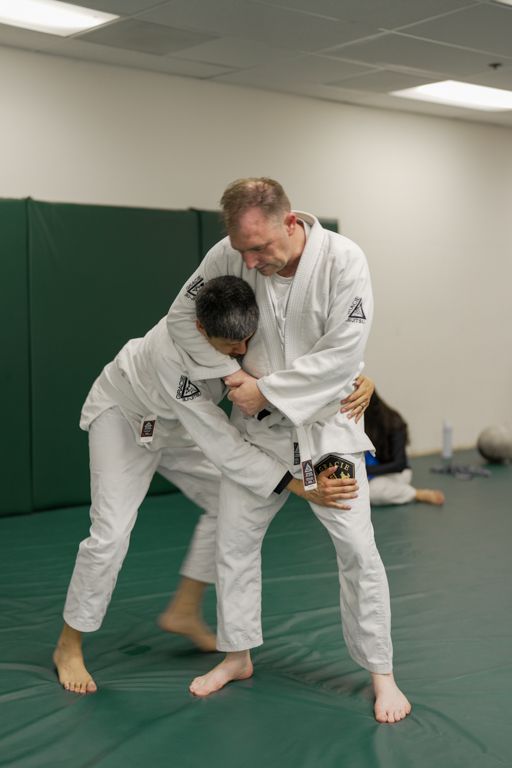
A surprising number of confrontations end up in clinch range. Even if a situation starts with words, it can quickly turn into grabbing, shoving, or tackling distance. That’s where grappling makes a difference, because we spend time learning how to stay balanced, protect our head, and avoid panic when someone is crowding your space.
Jiu-Jitsu also gives you a framework for what to do when you end up on the ground, which is where many people feel the most vulnerable. Instead of freezing, you learn specific positions, escapes, and ways to reestablish safety. We don’t train for chaos by being chaotic. We train for chaos by building structure.
And yes, it’s physical. You’ll sweat. You’ll get tired. But we build conditioning through technique, not through reckless intensity. That’s part of what makes training sustainable for adults with jobs, families, and normal bodies that have to feel good the next morning.
Our Training Approach: Pressure-Tested, Not Theory-Heavy
There’s a big difference between knowing a move and being able to use it under stress. Our classes are designed to bridge that gap. We teach technique step by step, then we give you controlled ways to practice it against resistance, so you can feel what works and what falls apart.
That “alive” practice is where your timing develops. It’s also where your confidence gets more honest. You stop guessing. You start understanding. Over time, you learn to make decisions while tired, while someone is pushing back, and while your heart rate is up. That’s the closest thing we have to real-life pressure without real-life risk.
We keep the room respectful and focused. People train hard, but we don’t treat intensity like a personality trait. If you’re here for self-defense, we want you training consistently, not getting burned out or banged up for no reason.
Adult Training That Fits Real Schedules in San Jose
Most of the adults we work with aren’t trying to become professional fighters. You’re trying to feel capable. You want to be harder to intimidate. You want to know you can protect yourself and the people you care about, even if you’re starting from scratch.
That’s why our Adult Jiu-Jitsu program is structured to be approachable without being watered down. You’ll learn fundamentals that actually show up in live training: posture, base, frames, escapes, and positional control. You’ll also learn how to pace yourself, because a big part of staying safe is knowing how not to panic when you’re under pressure.
If you’re specifically searching for Adult Jiu-Jitsu San Jose, CA, we built the experience with you in mind: clear instruction, progressive development, and training partners who remember what it felt like to be new. Nobody arrives “ready.” You get ready by showing up.
What You’ll Learn First (And Why It Matters)
When you’re new, it’s tempting to focus on submissions because they seem like the point. We teach those, of course, but our early emphasis is control and escape, because that’s what keeps you safe in real situations.
Here are a few core skills we prioritize early, and why they matter:
• How to break grips and protect your posture so you’re harder to control or pull off balance
• How to escape common pins so you can get back to your feet and create distance
• How to use frames and hip movement to keep space when someone is pressuring into you
• How to stabilize top position so you can control the situation without needing to strike
• How to think in “position before submission” so your choices stay reliable under stress
Those basics aren’t flashy, but they’re durable. And durability is what you want when adrenaline shows up.
Confidence That Shows Up Quietly in Daily Life
The most noticeable change for many students isn’t what happens in class. It’s what happens outside. You start walking with better posture. Your awareness improves. You get less rattled by minor confrontations because you’re used to managing pressure in a controlled environment.
There’s also real evidence that long-term training builds mental resilience. Research comparing higher ranks to beginners has found black belts show significantly higher mental strength, resilience, self-efficacy, and life satisfaction. We’re not saying a belt color magically fixes your life, but consistent practice does something to your nervous system. You learn to stay present and work problems.
And honestly, it’s nice to have an outlet that isn’t a screen. Training is physical, social, and focused. For a lot of adults, that’s a rare combination.
Safety, Injury Risk, and Training Smart
A fair question we hear is: Is Jiu-Jitsu safe? Any contact sport has risk, but Jiu-Jitsu compares well to many other grappling and striking arts. Injury rates are often reported as lower than judo, MMA, taekwondo, and wrestling. That doesn’t mean “no injuries,” but it supports what we aim for every day: smart training, controlled intensity, and good coaching.
We build safety into the culture. Tapping early is encouraged. Technique is prioritized over ego. We pair people thoughtfully and keep a close eye on pacing, especially for newer students. If you’ve been sitting at a desk all week, we’re not going to pretend your body should move like a full-time athlete on day one.
If you have prior injuries or limitations, we can help you modify training. You can still make progress, and you can still learn real self-defense skills, but we do it with awareness and patience.
How the Class Experience Actually Feels
People often picture a martial arts class as loud, chaotic, or intimidating. In our room, it’s typically focused and upbeat. You’ll hear coaching, movement, and the occasional laugh when somebody realizes they were holding their breath (it happens more than you’d think).
A typical session includes technical instruction, guided drilling, and optional live training where you apply what you’re learning against resistance. We keep the environment supportive, but not soft. You’re here to grow, and growth requires a little discomfort, just the right kind.
If you’re searching for Jiu-Jitsu San Jose, CA, you probably want a place where you can train seriously without feeling like you need to prove something every time you walk in. That’s the experience we work to protect.
Getting Started Without Overthinking It
Starting is usually the hardest part, mostly because it’s unknown. You don’t need to “get in shape first,” and you don’t need to memorize anything before you arrive. You just need a willingness to learn and a little consistency.
Here’s a simple way to approach your first few weeks:
1. Pick a realistic training frequency you can sustain, even when life gets busy
2. Focus on survival basics first: posture, breathing, frames, and escapes
3. Ask questions, even small ones, because clarity reduces frustration fast
4. Track progress by what feels calmer, not by how many taps you get
5. Stay patient with your timing, since timing is what makes technique work
That approach keeps training enjoyable and effective, which matters if self-defense is your goal. Real skill is built over time.
Take the Next Step
If you want self-defense that holds up under pressure, Jiu-Jitsu is a smart choice, and the training environment matters just as much as the techniques. We’ve built our classes to help you develop real control, reliable escapes, and confidence you can actually use, without turning training into a beatdown.
When you’re ready, we’d love to help you start in a way that fits your goals and your schedule at Gracie Jiu-Jitsu San Jose. You can get the details on the program, see how our classes run, and take that first step with a team that takes your progress seriously.
Put these techniques into practice by joining a Jiu-Jitsu class at Gracie Jiu-Jitsu San Jose.