
This is a subtitle for your new post
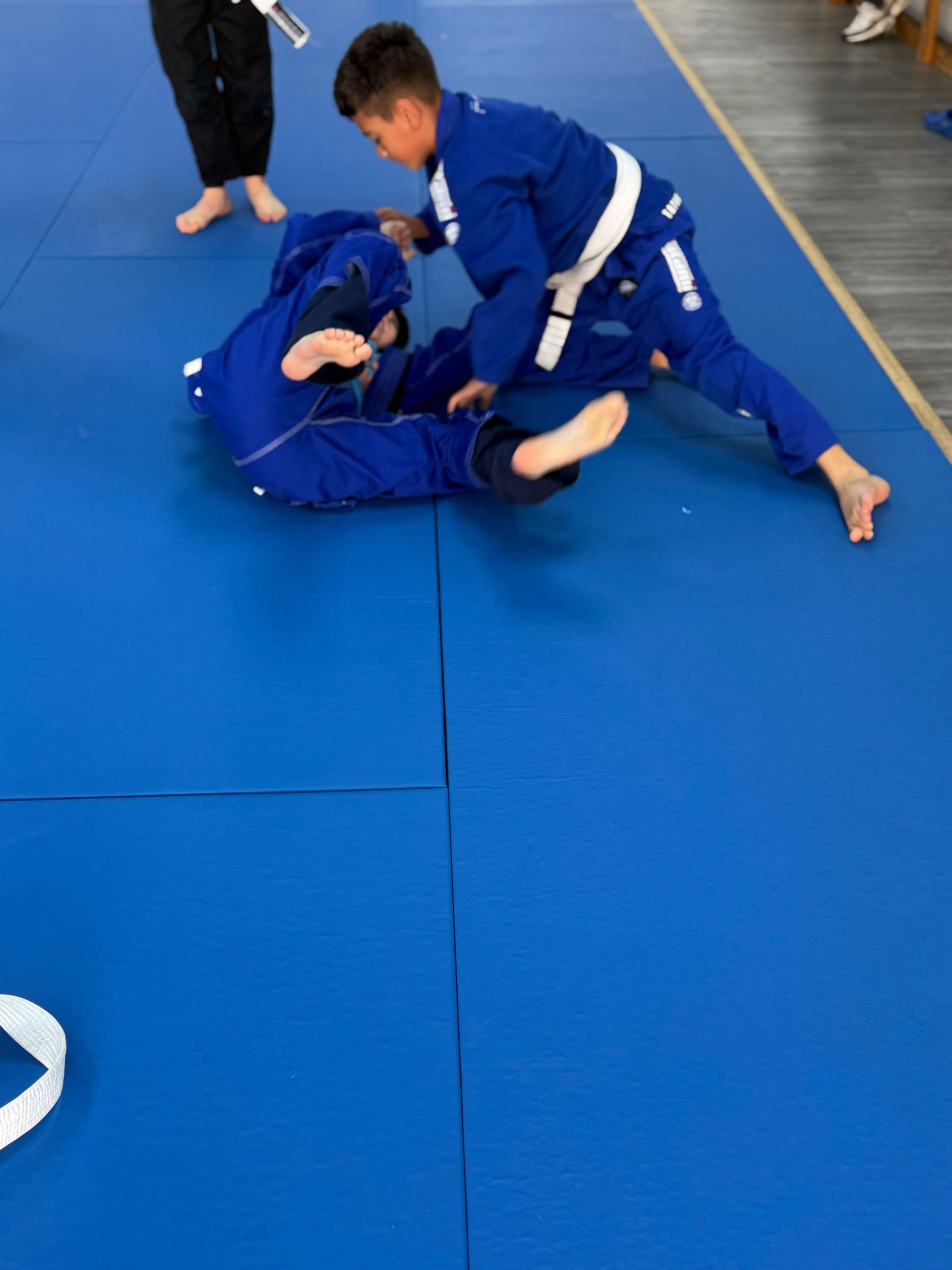
Jiu-Jitsu turns everyday stress into practical confidence you can actually feel in your body.
San Jose moves fast, and it is easy to feel like your schedule, your stress, and even your energy are being pulled in ten directions. We see it every week: people walk in looking for a workout or self-defense, and they stay because Jiu-Jitsu gives them something deeper and more usable than motivation. It gives structure, measurable progress, and a calm kind of confidence that shows up at work, at home, and out in the world.
What makes Jiu-Jitsu so empowering is how practical it is. You learn how to stay composed under pressure, solve problems in real time, and trust your ability to handle uncomfortable moments without panicking. That is not just a martial arts benefit. That is an everyday-life benefit, especially in a busy city like San Jose.
And the research lines up with what we hear from our students. In large surveys of Brazilian Jiu-Jitsu practitioners, 87.6 percent of adults report improved confidence, 87.5 percent report reduced anxiety, 96.9 percent report improved mood, and 100 percent report a strong sense of community. When you combine that with consistent training habits and a supportive room, the results are hard to ignore.
Everyday empowerment starts with learnable skills
Empowerment can sound vague until you tie it to something specific: what you can do, what you can manage, and what you can repeat. In our classes, empowerment looks like showing up after a long day and still having enough focus to learn. It looks like breathing steadily when you are in a tough position instead of freezing. It looks like making a small adjustment and seeing it work.
Jiu-Jitsu is built around leverage, timing, and position, which means you are not relying on raw athleticism to succeed. You are building a skill set. That matters if you are new to training, returning after time away, or simply tired of fitness routines that feel like punishment.
We also keep the training progressive. You do not get thrown into chaos on day one. You get a clear pathway that helps you build competence step by step, and that competence is what creates confidence that lasts.
Why Jiu-Jitsu fits San Jose life so well
San Jose is full of people balancing big responsibilities: long commutes, demanding careers, family schedules, and constant screen time. The paradox is that the more mentally busy you feel, the more valuable a physical practice becomes, as long as it is structured and safe.
Jiu-Jitsu gives you a clear task in the moment. You have grips to fight for, posture to maintain, and decisions to make. Your brain cannot multitask in the usual way, and that is part of the relief. You leave class feeling like your mind got a reset, not just your muscles.
From a fitness standpoint, sessions commonly burn 300 to 800 calories depending on intensity, and training supports cardiovascular health, strength, and endurance. The best part is that the workout is not random. The physical demand comes from learning and applying techniques, so your conditioning improves as your skill improves.
Confidence that is earned, not hyped
There is a difference between being told you are capable and proving it to yourself. Jiu-Jitsu is honest that way. A technique either works or it does not, and when it does, you know you earned it.
Over time, you start carrying yourself differently. You get used to small discomforts: being tired, being stuck, making mistakes, trying again. That process builds self-efficacy, which is a fancy way of saying you trust yourself to figure things out. Studies also show higher belt levels correlate with greater resilience, grit, self-control, and life satisfaction, without an increase in aggression.
We take that seriously in how we coach. The goal is not to make you feel tough for an hour. The goal is to help you build stable confidence you can access on a random Tuesday, in normal clothes, in normal life.
Stress relief and mental health benefits you can measure
A lot of people start because they want self-defense, but they quickly notice something else: training makes stress more manageable. When you practice staying calm during pressure, your nervous system learns that you can handle intensity without spiraling.
Research on practitioners reports reduced anxiety at 87.5 percent and improved mood at 96.9 percent. There is also promising evidence from a five-month program with veterans showing clinically meaningful reductions in PTSD, depression, and anxiety, with effect sizes ranging from 0.80 to 1.85. We do not treat training as therapy, but we do recognize that a well-run Jiu-Jitsu environment can be a powerful support for mental well-being.
You also get a break from the constant performance pressure of modern life. In class, you can be a beginner. You can ask questions. You can learn at your pace. That permission is surprisingly rare, and it is part of what makes the room feel like a reset.
A community you can lean on, without the awkwardness
Finding community as an adult is not always simple. People are busy, and social life can turn into a few text threads that never become real plans. Training changes that because you show up together, you work hard together, and you improve together.
In surveys, 100 percent of practitioners report a strong sense of community. We see why. Partner drills require trust. Sparring requires respect. And progress feels better when other people notice it, because they remember what it was like to be new, too.
Our culture emphasizes safety, learning, and being a good training partner. You do not have to be loud or outgoing to feel included. You just have to show up and train.
Youth Jiu-Jitsu in San Jose, CA: building calm, capable kids
Parents often ask us what Jiu-Jitsu does for kids beyond “burning energy.” The real answer is that it teaches children how to regulate themselves while they learn something challenging. That skill transfers everywhere.
In research, 96.4 percent of parents report improved confidence in their children. Participants also report better concentration and mental flexibility, with 75 percent noting improved concentration and 81.3 percent experiencing enhanced mental flexibility. Those are big numbers, but they make sense when you watch a child learn to listen, follow steps, and keep trying after a mistake.
In Youth Jiu-Jitsu San Jose, CA, we focus on clear structure: how to move safely, how to be respectful, and how to practice with control. Kids learn what it feels like to be steady under pressure, and that steadiness can show up in school, sports, and friendships. It is not about making kids aggressive. It is about giving them tools and boundaries.
What you can expect in our beginner experience
Starting something new is easier when you know what the room feels like. Our beginner-friendly classes are built to reduce the “Am I doing this right?” anxiety that keeps people from trying. You will learn fundamentals, but you will also learn how to train: how to warm up safely, how to move with a partner, and how to pace yourself.
Here are a few things we typically build early, so you feel grounded fast:
• How to protect yourself with posture, base, and simple movement before you worry about fancy techniques
• Positional concepts like control and escape, so you understand what matters and why
• Tap awareness and safety habits, so training stays smart and sustainable
• Basic submissions and defenses taught in context, not as random moves
• Partner etiquette and pacing, so you feel comfortable with the rhythm of class
If you are searching for Jiu-Jitsu San Jose, CA options because you want something approachable, this kind of structure is what keeps training consistent. Consistency is what creates real empowerment.
Fitness that feels like progress, not punishment
A lot of fitness plans fail because they are boring. Or because they rely on willpower alone. Jiu-Jitsu solves that by making fitness a side effect of learning.
You will build strength through movement and control. You will build endurance through rounds that challenge you in short bursts. You will improve mobility because the art demands it, not because you forced yourself to stretch for an hour.
And if you are worried about getting hurt, it helps to know that Brazilian Jiu-Jitsu has been reported to have a lower injury rate per 1,000 athlete exposures compared with judo, MMA, taekwondo, and wrestling. No contact sport is risk-free, but smart coaching, controlled training, and good partner choices make a huge difference. We emphasize those habits from the beginning.
How we keep training practical for real life
Empowerment is not just knowing moves. It is knowing what to do when things are messy. Real situations involve stress, imbalance, and uncertainty, so our approach centers on fundamentals that work when your heart rate is up.
We focus on positional control, escapes, and decision-making under pressure. That is what helps you build the ability to stay calm and choose wisely. You learn to recognize when to create space, when to hold position, and when to disengage. Those are practical skills that apply whether your goal is self-defense, sport, or simply feeling more capable in your own body.
For many students, the most surprising change is not physical. It is how quickly training improves their patience and problem-solving. When you practice solving problems on the mat, you get better at solving problems off the mat, too.
Take the Next Step
If everyday empowerment is your goal, Jiu-Jitsu gives you a repeatable path: learn a skill, test it safely, improve it, and carry that confidence into the rest of your week. That is what we build toward in every class, whether you are training for self-defense, fitness, stress relief, or a fresh start.
When you are ready to train with a program designed for real-world progress, we would love to welcome you at Gracie Jiu-Jitsu San Jose and help you take the first step in a way that feels clear, safe, and genuinely doable.
If you’re curious about Jiu-Jitsu training, join a class at Gracie Jiu-Jitsu San Jose and learn with confidence.