
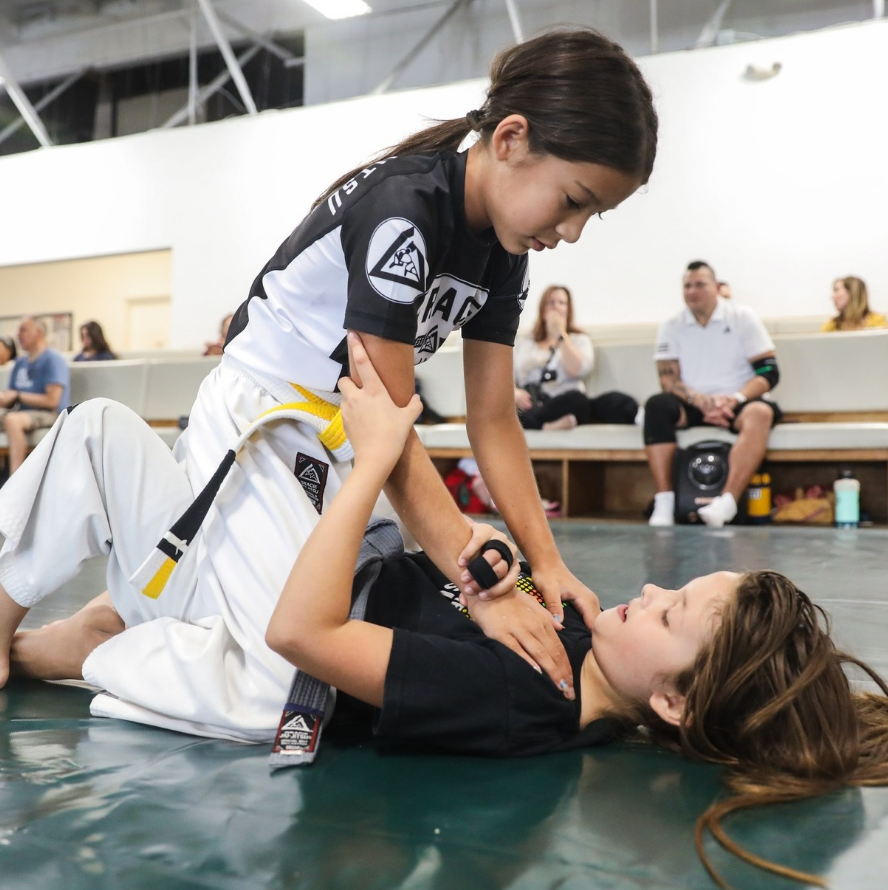
Real confidence is built when you practice staying calm under pressure, and the mats give you that practice on purpose.
Confidence is easy to talk about and harder to feel, especially in a city like San Jose where deadlines, traffic, and nonstop notifications can quietly wear you down. What surprises many new students is how quickly Jiu-Jitsu turns confidence into something practical, not just motivational. You learn skills you can test safely, refine weekly, and carry into work, relationships, and everyday decisions.
We see this shift because training is measurable. You can track what you did last month, what finally clicked today, and what you handled calmly that used to spike your anxiety. Research backs up what students report in real life: roughly 87.6 to 96.4 percent of adult practitioners say Brazilian Jiu-Jitsu improves confidence, along with major reductions in anxiety and boosts in mental flexibility.
In this guide, we will show you exactly how confidence gets built through training, how long it tends to take, what to expect in our adult classes, and how to use the process to feel steadier in your body and sharper in your mind here in San Jose.
Why Jiu-Jitsu Confidence Feels Different Than a Pep Talk
Jiu-Jitsu builds confidence because it replaces guessing with evidence. Instead of hoping you would handle pressure well, you practice pressure in a controlled environment where you can reset, learn, and try again. That is a big deal for adults who are used to needing to look competent all the time.
On the mats, you earn small wins that add up. You escape a bad position. You protect your neck. You breathe through discomfort without panicking. Each win is specific, and because it is specific, it sticks. Over time, your brain starts to treat challenges outside the academy the same way: solve the next problem, keep breathing, do not spiral.
Another reason confidence becomes “unbeatable” is that Jiu-Jitsu teaches you to be comfortable being a beginner. In a high-achievement culture like Silicon Valley, that is oddly rare. Training gives you a place where progress is expected to be messy, and that normalizes learning again.
The Science Behind Confidence Gains on the Mats
When adults say they feel more confident from training, it is not just because they got in better shape. The data points to broader psychological improvements that match what we coach for in class: self-efficacy, resilience, emotional regulation, and commitment.
Studies on Brazilian Jiu-Jitsu show large majorities of practitioners reporting improved confidence and mood, reduced anxiety, and stronger mental flexibility. Participants also consistently report a strong sense of community and respect, which matters more than people expect when life feels isolated or overly digital. That community element is not fluff. It is part of why many students keep showing up long enough to change.
Long-term training correlates with stronger mental traits, too. More experienced practitioners tend to score higher on resilience, grit, self-control, and life satisfaction. In plain terms, the longer you train, the more your mindset starts to look like someone who can take a hit, adapt, and keep going.
Confidence in San Jose: Stress, Performance, and the Need for Real Reset Time
San Jose has its own pressure cooker vibe. Many of our adult students work in engineering, product, healthcare, education, or management roles where you are expected to be calm, fast, and correct. That can be rewarding, but it also keeps your nervous system humming all day.
Jiu-Jitsu gives you a physical off switch that typical “relaxation” advice does not. In training, you cannot multitask. You cannot mentally juggle five tabs. You have to be present, because someone is trying to control you, and your job is to respond with technique. That kind of focus is one of the simplest paths to stress relief, and it tends to show up quickly, often within a few months.
We also see that the stress-management benefits translate outside the academy. Groups that operate under real-world pressure, like police officers, report improved confidence and stress handling when training Brazilian Jiu-Jitsu. The mechanism is familiar: repeated exposure to controlled intensity builds calmer decision-making.
What Confidence Actually Looks Like in Jiu-Jitsu Training
Confidence is not loud. In Jiu-Jitsu, it is usually quiet and practical. It looks like breathing steadily when someone is on top of you. It looks like choosing a clean escape instead of thrashing. It looks like tapping early, learning, and coming back without ego.
We build that on purpose by keeping training structured. You learn fundamentals, drill them, and apply them with increasing realism. The goal is not to “win the gym.” The goal is to develop a skill set you can rely on, and a mindset that does not crack when things get uncomfortable.
If you are training for self-defense, that calm matters. If you are training for fitness, it still matters. Either way, you start trusting your body again, which is a form of confidence many adults do not realize they lost.
Our Adult Program: A Clear Path From Beginner to Capable
If you are searching for Adult Jiu-Jitsu San Jose, CA options, you probably want two things at once: a safe way to start and a real way to grow. We structure our training so beginners are not thrown into chaos, but you also do not get stuck doing only “easy” work forever.
You will spend time on fundamentals like base, posture, frames, escapes, and positional control. These are not flashy, but they are the tools that keep you safe and make everything else work. As you progress, you layer in submissions, transitions, and strategy, and you start seeing how the art fits together like a system.
We also keep the environment supportive, because confidence grows faster when you feel like you belong. Research on Brazilian Jiu-Jitsu shows a near-universal sense of community and respect among participants, and we treat that as a standard, not a bonus.
A Simple Timeline: When You Tend to Feel the Mental Benefits
People want a timeline, and we get it. Adults are busy, and you want to know whether this is worth your time. While everyone is different, studies and student experience line up pretty well: meaningful mental health and confidence changes often show up in the 2.5 to 5 month range, with continued gains as training becomes consistent.
Here is a realistic way to think about it:
1. Week 1 to 2: You learn how class works, how to move safely, and you usually notice a small but real drop in self-doubt because you took action.
2. Week 3 to 6: Fundamentals begin to “stick,” and you start solving simple problems without freezing, which is a confidence spark.
3. Month 2 to 3: Many students feel noticeably calmer under pressure, and anxiety tends to drop as training becomes routine.
4. Month 4 to 5: You can handle harder rounds with better breathing and decision-making, and that steadiness starts showing up at work.
5. Beyond: Confidence becomes less about mood and more about identity: you are someone who can learn hard things.
If you want the process to work, consistency matters more than intensity. Training twice per week is a great baseline for most adults.
What Makes Jiu-Jitsu Transfer to Work and Daily Life
A lot of fitness hobbies feel great for an hour and then fade. Jiu-Jitsu transfers because it trains decision-making while stressed, not just muscles. You practice problem solving when tired, when someone is resisting, and when your first idea fails. That is basically a rehearsal for real life.
You also learn to separate discomfort from danger. That is huge for anxiety. When your body learns, through experience, that you can be uncomfortable and still safe, your mind stops treating every challenge like a threat.
We recommend one simple habit to make the transfer stronger: keep a short training journal. After class, write down one thing you learned, one thing you struggled with, and one small win. It takes two minutes, and it reinforces self-efficacy quickly.
Safety and Beginner Concerns: Yes, You Can Do This as an Adult
A common question we hear from people looking for Jiu-Jitsu San Jose, CA training is whether it is safe for beginners, especially adults with old injuries, stiff hips, or just a normal fear of looking foolish. Our answer is that safety comes from structure, good coaching, and smart partners, and that is exactly how we run class.
We teach you how to tap, how to protect your joints, and how to choose training intensity that matches your goals. You do not need to “prove toughness” to make progress. Ironically, the most confident students are usually the ones with the best self-control.
It also helps to know that long-term engagement in Brazilian Jiu-Jitsu does not increase aggression. Research points the other direction: mental health improves across experience levels, and more advanced practitioners show stronger self-control and resilience.
The Confidence Engine: Community, Accountability, and Belonging
Confidence grows faster when you are not doing it alone. On paper, Jiu-Jitsu is an individual skill. In practice, you improve because training partners help you, challenge you, and keep you consistent. That is why community is not a side note, it is part of the method.
San Jose can feel fast and fragmented. People move here for school or work, schedules are packed, and friendships can get squeezed. Training gives you a regular touchpoint with people who are working on something real. It is hard to overstate how grounding that feels after a long day staring at screens.
We also keep the tone respectful. You can train hard without being reckless, and you can be competitive without being disrespectful. When that becomes your normal, confidence starts to feel steady instead of performative.
What You Will Learn First to Build Real Self-Defense Confidence
Self-defense confidence is not about collecting moves. It is about learning priorities under stress, and repeating them until they become automatic. Early on, we focus on skills that help you stay safer quickly:
• How to stay balanced and protect your posture so you do not get overwhelmed immediately
• How to escape common bad positions like mount or side control using frames and hip movement
• How to control distance and grips so you are not just reacting
• How to apply simple submissions with control, not speed or force
• How to stay calm and make decisions while someone resists
These fundamentals are also what make training feel empowering early, because you can test them in live rounds and see them work.
Take the Next Step
Building “unbeatable” confidence is not about never feeling nerves. It is about knowing what to do when nerves show up, and having proof, from training, that you can handle pressure with skill and composure. That is what Jiu-Jitsu gives you when you practice consistently and let the process do its job.
When you are ready, we have a clear starting path at Gracie Jiu-Jitsu San Jose, with adult classes designed to help you learn safely, progress steadily, and feel that confidence carry into the rest of your week. If you have been searching for Adult Jiu-Jitsu San Jose, CA training that actually fits real life, we are here to help you start.
Develop confidence, technique, and control by joining a Jiu-Jitsu class at Gracie Jiu-Jitsu San Jose.