
You do not need to be in shape to start Jiu-Jitsu, but you do need a clear plan for your first few weeks.
Starting something new is rarely the hard part. The hard part is walking in on day one and not knowing what to do with your hands, what to wear, or whether you will slow everyone down. If you are looking for Jiu-Jitsu in San Jose, CA, we built our beginner experience to remove that guesswork and replace it with a simple progression you can actually follow.
Jiu-Jitsu is having a real moment worldwide, and the numbers back it up: millions of people train globally, and interest has grown steadily for years. But what matters to you is more personal. You want a safe place to start, a path that makes sense, and training that feels challenging without feeling chaotic. That is exactly what this guide is for.
What Jiu-Jitsu actually is (and why beginners tend to love it)
Jiu-Jitsu is a grappling martial art focused on control, leverage, and problem-solving. Instead of relying on speed or strength, you learn how angles, timing, and positioning change everything. Beginners often tell us the first surprise is how technical it feels, like learning a new language with your body.
Another reason people stick with it is feedback. You try something, it works or it does not, and you adjust. Progress is not magical, but it is measurable. Over time, you move better, breathe better under pressure, and get more comfortable in close contact, which is a big deal if you have never done a combat sport.
Who this beginner path is for in San Jose
We work with beginners across a wide range of backgrounds. Some people want practical self-defense. Others want a challenging fitness outlet that is not just another treadmill session. And many are simply curious about what Jiu-Jitsu looks like in real life, not just online clips.
If you are worried you are too old, too stiff, too busy, or too out of shape, you are not alone. Most adults start with at least one of those concerns. Our job is to meet you where you are and guide you forward without rushing the foundation.
Step 1: Set a realistic goal for your first 30 days
Beginners do best with goals that are simple and repeatable. Instead of aiming to “be good,” aim to show up consistently and learn a small set of essentials. In the first month, we want you to feel oriented, safe, and confident enough to keep training.
Here are a few realistic 30-day goals we recommend:
- Attend 2 to 3 classes per week, even if some weeks you only hit 1
- Learn how to fall safely and move on the mat without panicking
- Memorize a handful of core positions and what they are for
- Get comfortable asking questions during class when something feels unclear
- Leave each session feeling worked, but not wrecked
When your goal is consistency, your progress tends to show up quietly, then all at once.
Step 2: Know what to wear and what to bring (so you feel prepared)
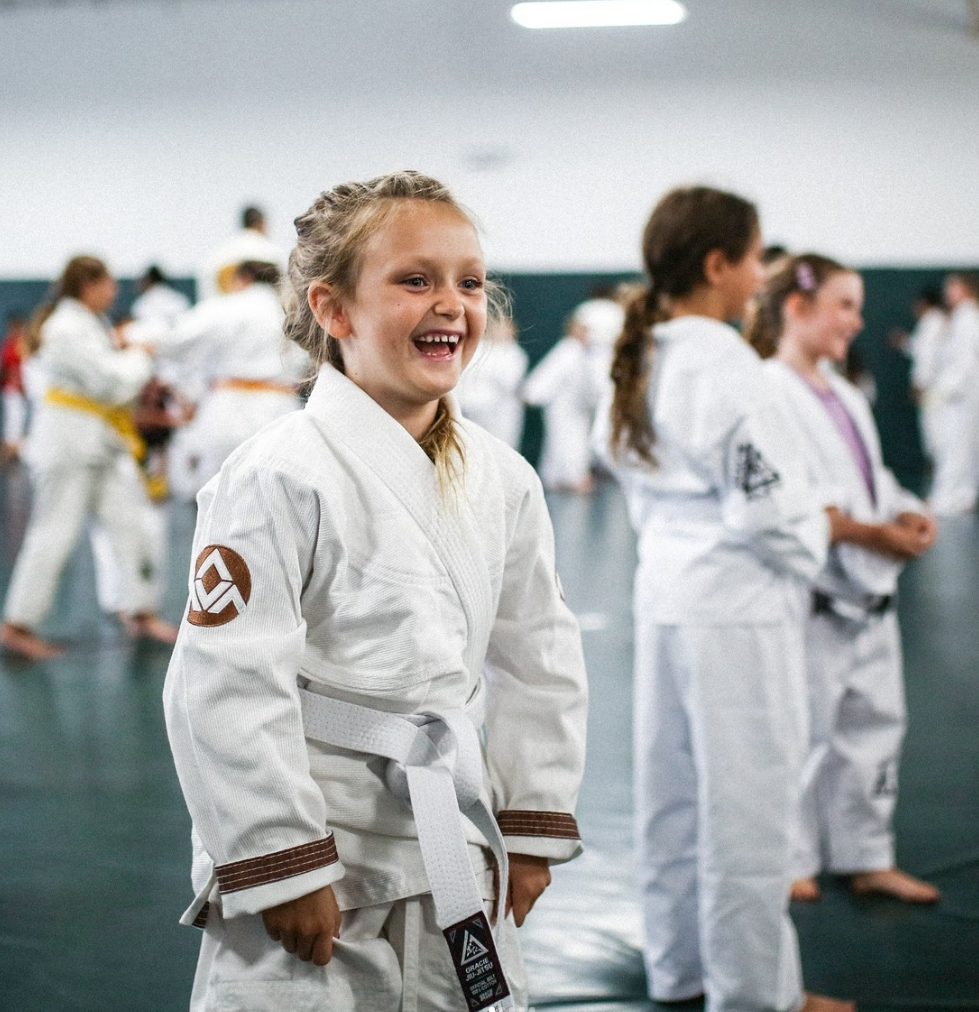
For beginners, comfort and cleanliness matter more than having the fanciest gear. If you are training in a gi class, you will need a gi and a belt. If you are training no-gi, you will typically wear athletic gear designed for grappling. Either way, you will want gear that stays in place and does not snag.
Bring water, a small towel, and sandals or slides for walking off the mat. Also, clip your nails and remove jewelry. That sounds like small stuff, but it is part of keeping training safe and respectful.
If you are not sure what you need for your first class, we will help you get sorted. You should not have to guess.
Step 3: Understand what happens in a beginner class
A solid beginner class is structured for learning, not surviving. We teach technique in steps, give you time to drill, and then help you apply it with appropriate intensity. You will not be thrown into the deep end with advanced students expecting you to keep up. That is not how people learn.
Most sessions include:
- A warm-up focused on movement patterns you will actually use
- Technical instruction with clear details and common mistakes explained
- Partner drilling to build repetition and timing
- Controlled practice rounds where you learn to connect the pieces
- Cool down and quick guidance on what to focus on next
The room will feel busy, but the plan is simple: learn, repeat, refine.
Step 4: Learn the “map” of Jiu-Jitsu first: positions and priorities
Beginners improve faster when you stop thinking of Jiu-Jitsu as a random collection of moves and start seeing it as a map. Positions are the landmarks. Once you know where you are, your choices make sense.
The early priorities are usually:
- Stay safe first, especially with your neck and arms
- Improve your posture and frames so you can breathe and move
- Learn how to escape bad positions before you chase submissions
- Build basic control from top positions without using brute force
This is where confidence comes from. Not from winning, but from not feeling lost.
Step 5: Your first weeks, week by week (a simple progression)
If you like having a plan, here is a straightforward way to approach your start. The point is not perfection. The point is steady exposure.
1. Week 1: Learn how to move, tap, and partner safely
2. Week 2: Build a couple of escapes and understand why they work
3. Week 3: Add one reliable control position and one basic submission setup
4. Week 4: Start linking techniques together and increase controlled sparring time
5. Ongoing: Keep tightening fundamentals and track small wins, not highlight reels
You will have days where everything clicks and days where you feel clumsy again. That is normal. In fact, it is part of the process.
Step 6: How we keep training safe for beginners
Safety is not just about rules. It is about culture and coaching. We emphasize control, communication, and smart intensity, especially for new students. You will learn when to tap, how to protect your training partners, and how to recognize when your body needs a little extra recovery.
If you have prior injuries or limitations, tell us. We can usually modify training and help you progress without aggravating old issues. Jiu-Jitsu should build you up over time, not break you down in a month.
Adult training in San Jose: what to expect physically and mentally
Adult Jiu-Jitsu San Jose, CA students often notice benefits in unexpected places. Yes, you will get stronger and improve conditioning. But you may also sleep better, handle stress more calmly, and feel sharper mentally. There is something about focused problem-solving under pressure that clears out mental noise.
The physical side is real, though. Your grip will get tired. Your hips and shoulders will learn new jobs. Some soreness is normal in the beginning, especially if you have not done mat-based training before. We help you pace it so you can train consistently.
Common beginner concerns (and our honest take)
If you are hesitating, it is usually because of one of these concerns. Here is how we frame it.
“I am not in shape.”
You get in shape by training. We scale intensity and coach fundamentals so you can build capacity safely.
“I do not want to get hurt.”
That is fair. We focus on controlled training, tapping early, and learning how to move safely with partners.
“I feel awkward with close contact.”
Most beginners do at first. It gets easier quickly when you understand positions and have clear boundaries and instruction.
“I am too old to start.”
We see adults start at many ages. What matters most is consistency, not your starting point.
How membership and scheduling usually work for beginners
Beginners do best with a simple weekly rhythm. We recommend choosing class times you can realistically keep, even during busy weeks. Consistency is what makes techniques feel familiar instead of brand new every time.
Our memberships are designed to support regular training, and we can walk you through options based on how often you want to train. If you like structure, we can help you map out a plan using the class schedule so you know exactly when you are training each week.
What progress looks like after 3 months (realistic milestones)
By about three months of consistent training, many beginners notice a few changes. You recognize positions quickly. You stop holding your breath. You can escape situations that used to feel impossible. And you start to understand strategy, not just moves.
You may still feel like a beginner, because you are, but your baseline confidence rises. That is a big win. And it is why so many people who try Jiu-Jitsu keep coming back.
Take the Next Step
If you are ready to start training with a clear plan, we would love to help you begin at Gracie Jiu-Jitsu San Jose. We keep the learning structured, the environment welcoming, and the training practical so you can build real skill without feeling overwhelmed.
Whether your goal is fitness, self-defense, or simply learning something that challenges you in a good way, we will guide you step by step and help you settle into a routine that fits your life here in San Jose.
New to Jiu-Jitsu? Start your journey by joining a class at Gracie Jiu-Jitsu San Jose.