
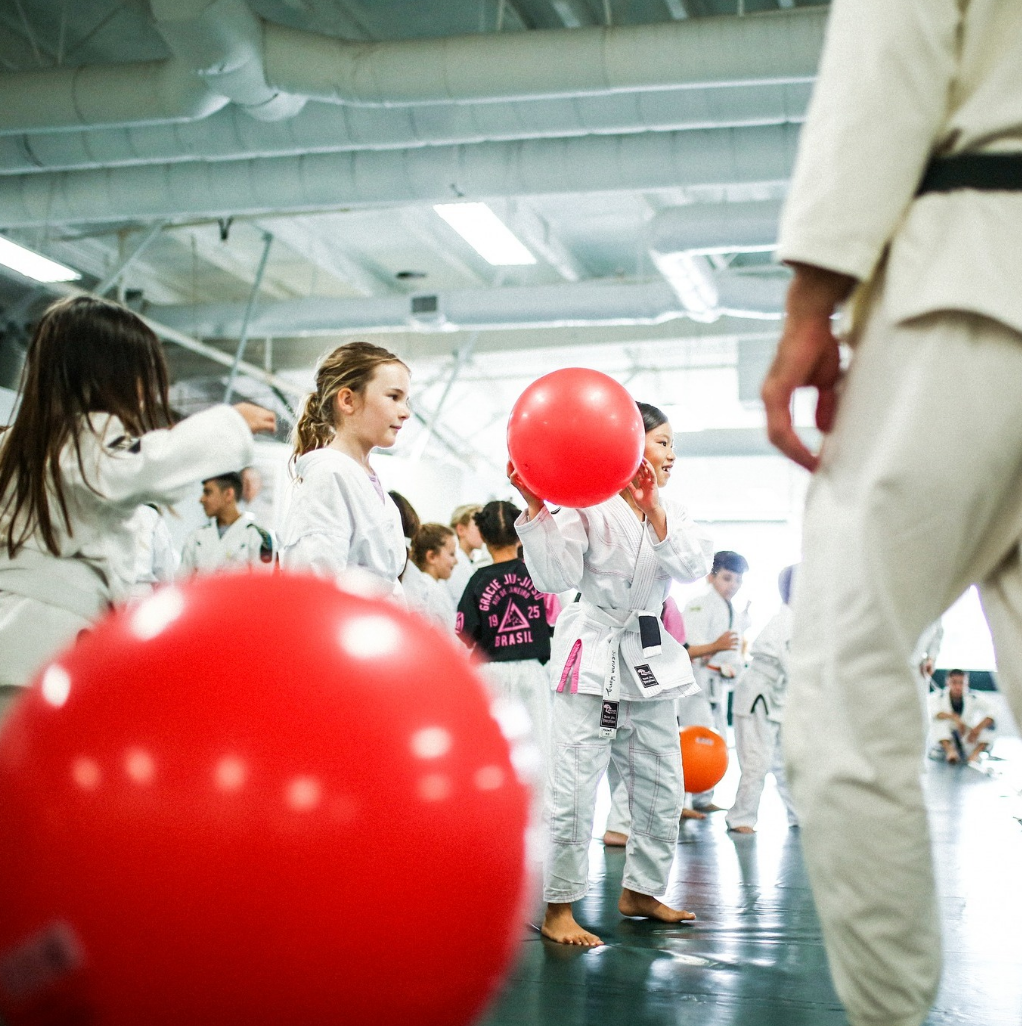
Jiu-Jitsu gives you a full-body workout and a calmer mind, and the confidence shows up long after class ends.
San Jose is a fitness-forward city, but most people are tired of routines that feel repetitive or disconnected from real life. We hear it all the time: you want to get stronger, leaner, and more energized, but you also want training that feels practical and motivating. That is one reason Jiu-Jitsu keeps rising to the top here.
What makes this training stick is that it is not only about sweating through a workout. It is skill-based. You learn how to solve problems with your body under pressure, and that process builds a steady kind of confidence. Over time, that confidence tends to spill into everything: work, relationships, even how you carry yourself in a crowded grocery store.
San Jose is also a genuine hub for the sport. Events like the IBJJF Spring tournament in town regularly draw hundreds of competitors across hundreds of divisions, which tells you something important: people here are showing up, training consistently, and taking their progress seriously. We built our programs to match that energy while still making the first step feel simple and beginner-friendly.
Why Jiu-Jitsu works for real-world fitness, not just the gym
A lot of fitness plans are built around motivation, and motivation comes and goes. Jiu-Jitsu is different because the workout is a byproduct of learning. You come in to practice technique, timing, and control, and you leave having trained strength, endurance, mobility, and coordination without staring at a clock.
Brazilian Jiu-Jitsu has always been known for emphasizing leverage over brute force. That idea became famous through the Gracie family and early UFC events, where smaller athletes like Royce Gracie repeatedly overcame bigger opponents with positioning and technique. The lesson for everyday adults is clear: when training rewards precision, you can progress at any age and any starting point.
This approach is also why so many people stay with it. Globally, roughly 6 million people practice Jiu-Jitsu, with about 750,000 in the United States, and interest has roughly doubled over the past decade. Those numbers reflect something deeper than a trend. People are finding a training method that keeps their body challenged and their mind engaged.
The San Jose factor: a city built for movement and measurable progress
San Jose has a culture that values performance and learning, and that fits Jiu-Jitsu perfectly. We are surrounded by people who like to understand how things work, track improvement, and build skills step by step. It is no surprise that local tournament participation is strong, including major IBJJF events hosted right here.
There is also an underlying fitness and movement-science influence in the area, with nearby programs like San José State University’s kinesiology department feeding the local interest in training smarter. You see that mindset in class when students ask good questions, care about mechanics, and want to do things correctly instead of just going hard.
For you, that means you are stepping into a community where improvement is normal. You do not have to be an athlete to belong here. You just need the willingness to learn, and we take care of the structure.
Fitness benefits you can feel within weeks
Most people notice changes quickly, but not always in the way they expect. Yes, your conditioning improves. But many students first notice how their posture changes, how their hips loosen up, how their breathing gets calmer under effort, and how daily aches start to fade because movement gets more balanced.
Here is what Jiu-Jitsu tends to develop when you train consistently:
• Stronger grip, back, and core from controlling positions and maintaining posture under pressure
• Better cardio from short bursts of high effort followed by controlled recovery
• More mobility in hips and shoulders from repeated, safe movement patterns
• Improved balance and coordination from learning how to base, frame, and move efficiently
• Real stress relief because your attention has to stay in the moment during training
This is why Adult Jiu-Jitsu San Jose, CA programs are often a better fit than workouts that only target appearance. You still get leaner and stronger, but the fitness is tied to capability, which tends to feel more satisfying.
Confidence that is earned, not imagined
Confidence can be a vague word until you feel it. In Jiu-Jitsu, confidence builds in small, specific wins: escaping a bad position you used to panic in, staying calm while someone pressures forward, or remembering a sequence under fatigue. Those moments add up.
We also see a quieter confidence develop, especially for adults who have not trained a martial art before. You learn what it feels like to be physically challenged in a safe environment, and you learn how to respond with technique instead of tension. That carries over into daily life in a surprisingly practical way: you become harder to rattle.
For many students, the confidence is not about looking intimidating. It is about feeling capable. Knowing you can manage yourself and your space, and knowing you have a plan when something goes wrong.
What to expect in our Adult Jiu-Jitsu program
Adults often worry that their first class will be chaotic or overwhelming. Our job is to make your entry feel structured. We coach details, we build fundamentals first, and we keep the training purposeful so you can learn without feeling thrown into the deep end.
A typical path looks like this:
1. Learn foundational positions, posture, and movement so you feel oriented quickly
2. Practice core techniques with clear steps, then repeat them enough to make them stick
3. Add controlled resistance so you can apply skills without panic or guesswork
4. Begin sparring when you are ready, with guidance on pace, safety, and goals
5. Track progress through consistency, not perfection, because nobody has perfect days
If you are searching for Adult Jiu-Jitsu San Jose, CA and you want a program that respects your time, this progression matters. It makes training sustainable, and sustainability is what actually changes your body and your confidence.
Safety, injuries, and training smart in a demanding sport
Let us be straightforward: Jiu-Jitsu is a contact sport, and contact sports come with risk. A 2019 study reported that about 59 percent of athletes experienced an injury within the prior six months. That number can sound intense until you understand what drives it, and what you can do about it.
Injury risk tends to increase when people train with uncontrolled intensity, skip warm-ups, or treat every round like a competition. It also tends to decrease with experience, because experienced students move more efficiently, tap earlier, and choose safer decisions under pressure. In other words, skill is protective.
Our approach is to keep your training productive and controlled. We emphasize tapping early, communicating with partners, and building physical resilience gradually. We would rather see you train three days a week for years than train seven days a week for one month and disappear with a sore neck. That is not a moral statement, it is just practical.
Costs, membership expectations, and what you are paying for
People also want clarity about price, because fitness in California can get expensive fast. Across the state, average monthly dues for Brazilian Jiu-Jitsu are around $155.79, and many schools involve upfront costs that can range from roughly $88 to $499 depending on gear and enrollment. Per-hour averages have been reported around $38.
We keep our membership options straightforward and aligned with what adults actually need: consistent classes, real coaching, and a schedule that works with work and family life. If you are trying to plan your budget, the simplest way is to look at training as a monthly investment in both fitness and skill. You are not just paying for floor space. You are paying for structured instruction, partner training, and a curriculum that keeps you progressing.
If you have questions about what is included and what you need for your first class, the website lays it out clearly, and we are happy to help you choose the simplest starting point.
Why technique-based training fits every body type and age
One of the biggest misconceptions is that you need to be strong, young, or naturally athletic to start. Technique is the whole point. Leverage, angles, and timing allow smaller people to manage larger resistance, which is exactly what made Gracie-style Jiu-Jitsu famous in the first place.
For adults, this matters because it changes the relationship with fitness. Instead of trying to force your body into a workout that does not match you, you learn a system that adapts to you. Taller students often develop strong frames and long-range control. Shorter students often become excellent at closing distance and staying tight. Stockier students can build pressure and stability. Leaner students may develop speed and mobility. No body type is disqualified.
And age is not a dealbreaker either. We regularly work with adults who have not played a sport in years. The key is pacing, good coaching, and consistency. The rest comes with time, even if that time is a little messy at first, which is normal.
The local competition scene and why it motivates everyday students
Not everyone wants to compete, and you do not have to. But San Jose’s tournament scene still helps beginners, because it creates a culture of measurable progress. When a city hosts major events with hundreds of fighters and divisions, you end up with a community that values fundamentals, preparation, and steady improvement.
Even if you never step on a mat at a tournament, you benefit from that environment. Training partners are often goal-oriented. Class structure stays sharp. Coaches think in terms of progression, not random workouts. And if you ever do decide to try an event, you already live in a place where that option is right down the road.
We also see more adults using competition as a personal milestone rather than an identity. Train consistently, learn the basics, get comfortable with nerves, and treat it like a fitness test plus a learning experience. That perspective keeps it healthy and sustainable.
How we make the first month feel doable
Starting is usually the hardest part, mostly because of uncertainty. You do not know what to wear, how hard class will be, or whether you will feel out of place. We remove as many unknowns as possible by keeping the onboarding clear and the instruction detailed.
In your first month, our goal is simple: help you build a foundation you can trust. That means learning how to move safely, how to partner well, and how to understand positions so sparring does not feel like chaos. We want you to leave each class feeling like you learned something specific, not like you survived something.
If you are looking for Jiu-Jitsu San Jose, CA training that supports adult schedules, this is where our class schedule matters. Consistency beats intensity, and a realistic schedule is what makes consistency possible.
Take the Next Step
If you want fitness that feels useful and confidence that is earned through skill, Jiu-Jitsu is one of the most complete options you can choose in San Jose. Our method stays rooted in technique, safety, and steady progress, so you can train hard without burning out or guessing your way forward.
At Gracie Jiu-Jitsu San Jose, we keep the experience structured and welcoming, with adult programs designed to build fundamentals, conditioning, and composure in a way that fits real life. When you are ready, we will help you take that first step and keep building from there.
If you are curious about learning Jiu-Jitsu, join a class at Gracie Jiu-Jitsu San Jose and train with confidence.