
Jiu-Jitsu is more than a workout, it is a practical skill set that quietly improves how you move, think, and handle pressure.
Jiu-Jitsu has a funny way of showing up in the rest of your day. You might come in looking for fitness or self-defense, but you leave noticing something else: you breathe differently when stress hits, you stand with better posture in line at the coffee shop, and you problem-solve with a little more patience. We see this shift all the time in our classes in San Jose, because the techniques are physical, but the lessons are bigger than that.
The timing makes sense, too. Around 6 million people practice Jiu-Jitsu worldwide, and roughly 750,000 train in the USA, with interest continuing to climb as more adults look for training that is both mentally engaging and physically sustainable. It is not just a trend toward competition, either. More than 75 percent of practitioners report that consistent training improves problem-solving outside the mat, and that tracks with what you will feel when your brain starts getting used to calm decisions under pressure.
In this article, we will break down the Jiu-Jitsu techniques and habits that translate directly into everyday life, especially for busy adults balancing work, family, and health goals here in Jiu-Jitsu San Jose, CA.
Why Jiu-Jitsu Transfers So Well to Real Life
A lot of fitness programs only challenge your body. Jiu-Jitsu challenges your body and your decision-making at the same time. Every round asks you to manage distance, timing, leverage, and emotion, all while staying safe and controlled. That combination builds a kind of practical confidence, not the loud kind, the steady kind.
There is also a reason Jiu-Jitsu is growing so quickly. The global market for the sport has been estimated around 500 million in 2025 and is projected to keep expanding rapidly through the next several years. People are choosing it because it stays interesting. You can train for decades and still learn, still refine, still surprise yourself.
For adults, the biggest advantage is that technique matters more than brute force. When we coach you to use frames, angles, and timing, you start to realize you can solve hard problems without muscling through them. That lesson shows up at work, at home, and in how you manage your own energy.
The Core Techniques That Upgrade Your Daily Movement
Base and posture: the foundation you feel everywhere
In class, we talk about posture and base constantly, because they keep you stable and hard to move. Outside class, that turns into better movement in everyday life: lifting groceries, picking up kids, working at a standing desk, even just walking without collapsing into your hips.
Posture in Jiu-Jitsu is not about looking rigid. It is about being stacked and balanced so you can react without strain. Over time, your body starts choosing those positions automatically, which tends to reduce little aches that come from moving carelessly.
Framing: creating space without panic
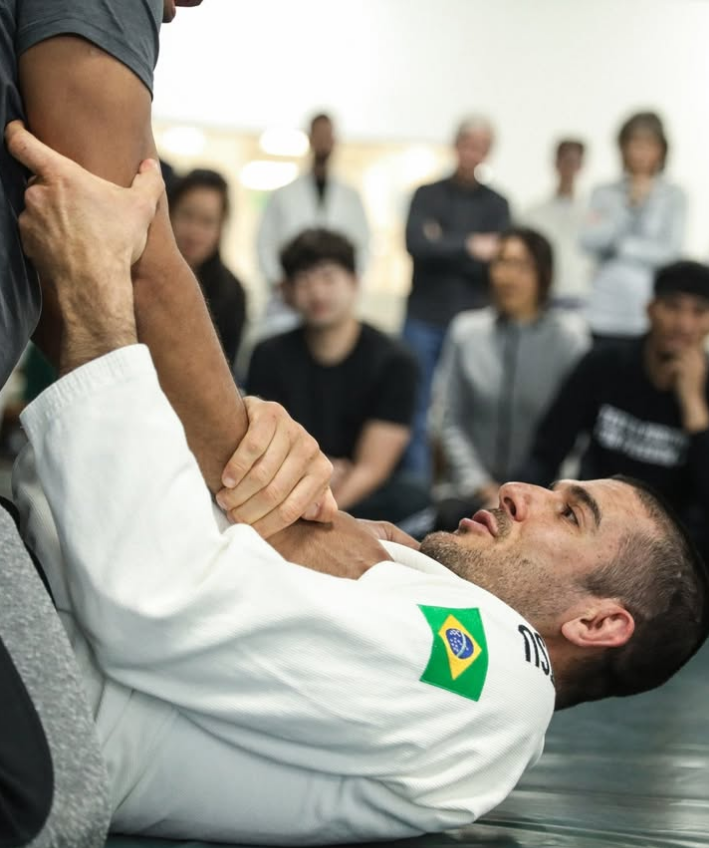
Frames are one of the most useful concepts we teach because they are so repeatable. A frame is simply a structure you build with your arms, elbows, or shins to manage distance and protect yourself. In daily life, “creating space” becomes a real skill, especially when you feel overwhelmed. You stop rushing. You set boundaries. You give yourself room to think.
When you learn to frame properly, you also learn not to overcommit. That matters in conversations, deadlines, and conflict. You can stay engaged without getting smashed by the moment.
Hip movement and angles: solving problems sideways
Most beginners try to move straight back or straight forward. In Jiu-Jitsu, we teach you to change angles, use your hips, and rotate into better positions. It is simple, but it changes everything. The life version of that is learning to stop pushing directly against resistance. When something is stuck, you look for a better angle, a better timing window, a better lever.
That mindset can be surprisingly calming. Instead of “try harder,” your default becomes “try smarter.”
Pressure, Breath, and Staying Calm When Things Get Messy
If you have ever had a long day and felt your shoulders creep up to your ears, you already understand why breathing matters. In training, pressure is real. Someone is trying to control you. Your heart rate spikes. You have to decide whether you are going to tense up and burn out, or breathe and work.
We coach you toward the second option. Controlled breathing improves endurance, but it also teaches emotional regulation. You learn to notice panic early and interrupt it. In normal life, that looks like taking a difficult phone call without spiraling, or pausing before reacting in an argument.
A lot of students tell us this is the first time they have practiced calmness in a measurable way. Not as an idea, but as a skill.
Everyday Problem-Solving Through Positional Strategy
Jiu-Jitsu is often described as human chess, but the real value is simpler: it teaches you to prioritize. You do not try to win everything at once. You aim for small improvements that stack.
We teach positions in a progression because your success depends on sequence. You establish safety first, then control, then advancement, and only then do you hunt for submissions. That approach maps cleanly to everyday challenges: stabilize first, then organize, then push forward.
Here is a practical way to think about it, using a typical skill progression we build into our coaching:
1. Survive: protect your space, manage frames, and stop the immediate problem from getting worse
2. Stabilize: regain posture, slow the pace, and settle into a position you can hold
3. Improve: change the angle, win inside space, and earn better control
4. Finish: apply a technique with precision, not urgency, and then reset and learn from it
That sequence is not just for sparring. It is a blueprint for handling pressure at work, navigating a tough week, or rebuilding consistency when motivation dips.
Fitness You Can Actually Stick With as an Adult
Many adults in Adult Jiu-Jitsu San Jose, CA come in with the same concern: “I want to get in shape, but I need something I can maintain.” We get it. Jiu-Jitsu works because it is not just repetitive exercise. You are learning while you sweat, and that keeps you engaged.
Your training naturally blends strength, mobility, and conditioning. Grip strength improves. Core engagement becomes more automatic. Hips and shoulders open up as you drill. You also get a steady dose of interval-style cardio during rolling, but without the boredom that can come from machines.
And because training is skill-based, you can scale intensity. Some days you move hard. Some days you focus on technique and timing. Consistency becomes realistic, which is the part that actually changes bodies.
Modern Training Trends We Use Without Losing the Fundamentals
Jiu-Jitsu keeps evolving. No-gi grappling continues to grow, wrestling integration is more common, and serious competitors study leg lock systems with heel hooks as standard knowledge. We pay attention to where the sport is going, but we do not chase trends at the expense of fundamentals.
For most adults, the goal is not to collect flashy moves. It is to build reliable mechanics that work against resistance. That is why we keep returning to core skills like posture, frames, guard retention, escapes, and controlled top pressure.
We also like the idea of data-driven training when it serves your recovery. Tracking sleep, stress, and soreness can help you train smarter, especially if you are juggling a full schedule. The mat teaches effort. Your calendar teaches restraint. You need both.
What a Typical Class Experience Feels Like
If you are new, the unknown can be the hardest part. So here is what usually happens: you warm up, you drill a focused technique with coaching, and you practice it with a partner in a controlled way. Then, depending on the class, you may do live rounds where you apply what you learned with supervision and safety guidelines.
You will not be thrown into chaos without context. We want you to understand why a technique works, what the common mistakes are, and how to keep yourself and your partner safe. The room should feel focused, not intimidating.
A detail people notice quickly is how cooperative training partners are. Even during hard rounds, the goal is development. That makes it easier to show up consistently, which is where progress lives.
The Life Benefits Our Students Notice First
The “big” benefits like confidence and self-defense matter, but most adults notice smaller changes first, the kind that sneak up on you. Here are a few we hear again and again:
• Better stress management because you practice staying composed while your heart rate is high
• Clearer boundaries because you learn what pressure feels like and how to create space
• More patience because technique requires problem-solving, not rushing
• Improved body awareness so you move with fewer wasted steps and less strain
• A stronger sense of consistency because progress is visible through small wins
These are not abstract concepts. You can feel them in how you stand, how you breathe, and how you respond to the day.
Take the Next Step
Building these skills does not require perfection or a certain fitness level. It requires a good plan, steady coaching, and a place where you can train with structure. That is what we focus on every day, and it is why so many adults stick with Jiu-Jitsu once they experience how practical it feels.
If you are ready to train in a way that strengthens your body and sharpens your mindset, we would love to welcome you at Gracie Jiu-Jitsu San Jose. You can explore the class schedule, learn how our programs work, and take your first step with a pace that fits real life in San Jose, CA.
Continue your Jiu-Jitsu journey beyond this article by joining a class at Gracie Jiu-Jitsu San Jose.