
A few focused hours a week can change how your body feels, how your mind handles stress, and how confident you move through San Jose.
If your calendar is packed and your energy is inconsistent, fitness can start to feel like another chore you “should” do. We see that all the time with adults in San Jose who want to get stronger and sharper, but don’t want a chaotic routine or a program that depends on being naturally athletic.
Jiu-Jitsu works especially well for busy adults because it rewards consistency over intensity. When you train with a structured plan, you can make progress without living at the gym, and you can build real skills while you’re at it. Our job is to make that process clear, safe, and sustainable, so you can train for years, not just a few motivated weeks.
In this guide, we’ll break down how our adult training is designed to fit modern schedules, what you’ll learn first, how progression works, and why so many professionals choose Jiu-Jitsu in San Jose, CA as their “reset button” after long workdays.
Why Jiu-Jitsu fits the pace of San Jose life
San Jose moves fast. Work is demanding, traffic is real, and screen time is basically unavoidable. Most adults don’t need another high-impact program that leaves you limping into meetings. You need training that improves your body and your headspace, without requiring perfect attendance or superhuman recovery.
Jiu-Jitsu is efficient because it’s skill-based. Instead of chasing calories with endless repetition, you practice leverage, timing, and control. That means your sessions stay mentally engaging, and your physical conditioning improves as a side effect of learning to solve problems under pressure.
For busy adults, the biggest win is that you can scale effort up or down while still learning. Some days you’ll push hard. Other days you’ll show up a little tired and still get a meaningful session because the structure carries you.
Strength, focus, and balance: the adult results that actually matter
People often start for self-defense, fitness, or curiosity, but adults stay because of the day-to-day benefits. Jiu-Jitsu doesn’t just “work you out,” it organizes you. Your posture improves, your breathing gets calmer, and you start noticing how you move in regular life, like lifting groceries or getting up off the floor.
Physically, consistent training supports muscle tone, flexibility, and better body awareness. Many adults also appreciate the wellness side: improved cardio capacity, healthier blood sugar markers, and movement quality that makes other activities feel easier. We’re not promising miracles, but we are saying the trend is real when training becomes routine.
Mentally, Jiu-Jitsu is a pressure management skill. You learn to stay calm while you’re uncomfortable, think through a problem, and make decisions without panicking. That carries into work, parenting, and those moments when life gets loud.
A beginner-safe path: how we start adults the right way
A common concern is whether Adult Jiu-Jitsu San Jose, CA programs are welcoming for true beginners. Our answer is simple: yes, and we built the early phase specifically for people who have never trained.
We start most adults in a structured beginner curriculum called Gracie Combatives. It teaches 36 essential self-defense techniques with a cooperative, no-sparring approach at the start. That matters because beginners don’t need chaos, they need clarity. You’ll learn foundational movements and how to apply them in realistic scenarios, without getting thrown into live rounds before you’re ready.
Because the environment is cooperative, you can focus on good reps, safe training habits, and understanding what you’re doing. That’s where confidence grows, and it’s also where injury risk drops dramatically.
What you learn first (and why it’s not random)
We don’t stack techniques just to keep things “interesting.” The beginner sequence is designed to be practical and repeatable, so you can show up twice a week and still feel oriented instead of lost.
In the early months, we focus on:
- Core self-defense positions and escapes so you can create safety and space
- Control concepts like base, posture, and frames that keep you stable under pressure
- Clinch and ground fundamentals that apply to real-world situations
- Clean mechanics that protect your joints and build long-term training habits
You’ll also learn what to pay attention to: breathing, balance, timing, and how to use leverage instead of strength. That’s the secret sauce for adults, especially if you’ve got a desk job and don’t want your training to depend on being explosive.
How we make progress measurable for busy adults
One reason adults quit martial arts is uncertainty. If you don’t know what “good” looks like, you can’t tell if you’re improving. Our structure solves that with a clear curriculum, attendance tracking, and support resources that help you stay connected even when work gets messy.
We use weekly cycles and organized lessons so you’re not gambling on what you’ll learn each day. If you miss a class, you’re not “behind forever.” You simply pick up the next session and keep moving. We also encourage video review to reinforce details, which is especially helpful if your schedule forces you to train a little inconsistently for a stretch.
That structure is a big reason adults doing Jiu-Jitsu San Jose, CA training with us describe it as steady progress instead of rollercoaster progress.
From fundamentals to mastery: what comes after the beginner phase
After you’ve built a foundation through the beginner curriculum, you can move into our Master Cycle. This is where you expand into more advanced ground techniques, transitions, and submissions, and where controlled live sparring becomes part of your training.
The key word is controlled. Sparring is valuable, but it needs context and coaching. When you enter sparring with a strong base of fundamentals, you can train with intention instead of survival-mode flailing. That’s safer, and it’s also more fun, because you can actually try ideas and learn from the results.
Many adults complete the 36-technique curriculum over roughly 8 to 12 months depending on frequency. Training two to three times per week is a sweet spot for most busy professionals: enough for momentum, not so much that it takes over your life.
A realistic weekly plan for adults who have jobs, families, and deadlines
You don’t need seven days a week. You need a rhythm you can repeat.
Here’s a simple approach we recommend to many new students:
1. Pick two consistent training days and treat them like appointments you keep.
2. Add an optional third class when your week is lighter, not when you’re already drained.
3. Use video review for five to ten minutes on non-training days to keep techniques fresh.
4. Prioritize sleep and hydration on training days so recovery stays predictable.
5. Track small wins, like cleaner escapes or calmer breathing, not just “how hard” class felt.
This matters because busy adults don’t fail due to laziness. You usually fail due to planning a schedule that only works during your easiest weeks.
Safety and injury prevention: what adults should know
Adults are right to ask about injuries. Jiu-Jitsu is a contact martial art, but how you train makes a massive difference. We keep the early phase cooperative, emphasize technical control, and coach you on tapping early and training with awareness.
We also teach you how to choose appropriate intensity. Not every round has to be a battle. In fact, consistent adults often train longer because they learn to keep ego out of the room and protect their joints.
If you’ve had old injuries, we’ll help you modify positions and pace. The goal is progress you can sustain, not a heroic week followed by six weeks off.
Jiu-Jitsu as a mental reset for tech and desk-work adults
A lot of adults come in thinking they’re mainly here for fitness. Then, somewhere around the third or fourth week, you notice the bigger shift: your mind gets quieter.
Jiu-Jitsu demands full attention. You can’t half-scroll your thoughts while someone is trying to control your posture. That focus becomes a kind of moving meditation, but grounded in real problem-solving. After class, many students describe feeling pleasantly tired, clearer, and less reactive.
That’s not just a vibe. Focused physical training can reduce stress hormones and improve your ability to regulate emotions. And unlike workouts where you can zone out, Jiu-Jitsu trains your attention, which is exactly what many professionals feel they’ve lost after years of constant notifications.
What to expect in your first class
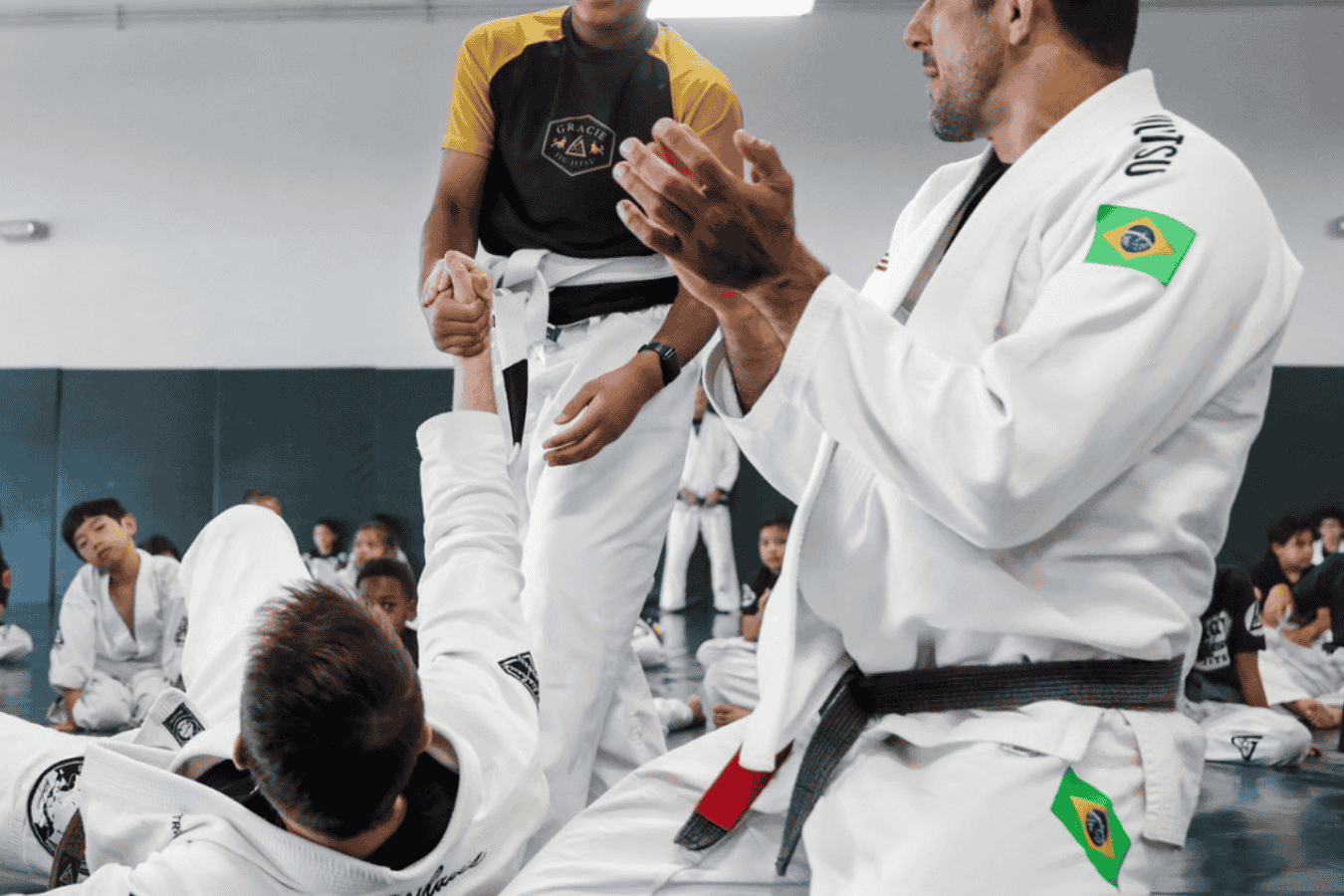
Your first class should feel organized, not intimidating. We’ll guide you through what to wear, how class flows, and how to train safely with a partner. Expect to learn a small number of details, repeat them, and ask questions. Nobody expects perfection.
You’ll sweat a little, you’ll think a lot, and you’ll probably walk out feeling like your shoulders dropped an inch. That’s normal. Jiu-Jitsu is physical, but it’s also surprisingly grounding.
Take the Next Step
If you want training that builds real self-defense skill, better conditioning, and a calmer kind of confidence, we’ve built the path for it at Gracie Jiu-Jitsu San Jose. Our adult programs are structured so you can start from zero, stay safe, and make progress even when your workweek is unpredictable.
When you’re ready, we’ll help you plug into the class schedule, start with the beginner curriculum, and build a routine that supports your life instead of competing with it at Gracie Jiu-Jitsu San Jose.
Develop solid fundamentals and elevate your training by joining a Jiu-Jitsu class at Gracie Jiu-Jitsu San Jose.