
The fastest confidence shifts often start on the mat, with small wins your child can feel right away.
Confidence is one of those things parents can spot quickly, even when it is hard to describe. You notice it in posture, in eye contact, in how your child handles a tough moment at school without melting down. Jiu-Jitsu is a practical way to build that confidence because progress shows up in real time: a technique clicks, a position improves, a child stays calm under pressure and realizes, “I can do this.”
In San Jose, we see families looking for something that is more than a weekly activity. You want your child to feel safer, speak up sooner, and carry themselves with quiet self-assurance. Our kids Jiu-Jitsu program is built to do exactly that through structure, repetition, and a positive training culture that keeps kids engaged.
We also keep it age-appropriate. Kids can start young, often around ages 3 to 5, and we meet your child where your child is. For some kids that means learning how to line up, listen, and take turns. For others it means channeling big energy into focused drills. Either way, the goal is the same: real confidence that shows up outside the academy.
Why Jiu-Jitsu builds confidence faster than many activities
There are plenty of great youth activities in San Jose, but Jiu-Jitsu has a unique advantage: the feedback loop is immediate. Your child tries a movement, gets coached, adjusts, and sees a result right away. That quick cause-and-effect experience is a powerful confidence builder.
We focus on a few core mechanisms that make the confidence gains feel “fast” for many families:
• Clear problems with clear solutions: A child learns what to do when someone grabs a wrist, pushes, or gets too close.
• Safe pressure: Kids practice handling resistance in a controlled environment, so stress becomes manageable instead of scary.
• Measurable progress: Techniques and positions become familiar, and your child can tell that improvement is real.
• A calm mindset: Jiu-Jitsu rewards patience, breathing, and decision-making over raw strength.
When kids learn to stay composed while solving a physical problem, that skill often transfers to school and social situations. We hear parents describe it as “a switch” flipping, but it is really practice adding up.
What confidence looks like in kids, week by week
Confidence is not just being loud or fearless. In fact, the most useful confidence often looks quiet. Here are a few changes we commonly see as kids settle into training.
Week 1: Comfort with the room and the routine
The first class is about orientation. New students learn where to line up, how to move safely, and how to participate respectfully. Many kids are nervous at first, and that is normal. Our job is to help your child feel supported while still keeping standards clear.
Your child’s first win might be as simple as finishing class and wanting to come back. That matters.
Weeks 2 to 4: “I can do hard things”
This is where parents often notice a shift. Kids start remembering steps, using correct terminology, and recognizing patterns. They also get used to training with partners, which teaches cooperation and self-control.
A big part of Jiu-Jitsu confidence is learning that mistakes are not a problem. Getting something wrong is just information. When kids stop taking correction personally, growth speeds up.
Month 2 and beyond: Calm under pressure
Over time, children start to manage intensity better. Instead of panicking when pinned or stuck, they learn to breathe, frame, and work toward an escape. That calm problem-solving skill is the real prize.
When a child realizes, “Pressure does not control me,” confidence becomes something your child carries everywhere.
Anti-bullying skills without turning kids into bullies
Families often come to us because of bullying concerns. We take that seriously, and we approach it the right way: prevention first, physical skills second.
We teach kids to recognize boundaries, use strong posture, and communicate clearly. We also train practical self-defense that relies on leverage and positioning instead of striking. The message stays consistent: our goal is safety and control, not domination.
In age-appropriate ways, we coach students to:
- Use their voice early, before situations escalate
- Create space and disengage when possible
- Control a grab or clinch long enough to get away
- Stay aware of surroundings and seek help fast
Jiu-Jitsu gives kids tools, but it also gives them restraint. That combination is what parents usually want.
How our kids classes are structured (and why structure matters)
Kids do best when expectations are consistent. Our classes follow a predictable rhythm so children can relax and focus.
A typical class flow
We keep the pace moving while leaving room for coaching and quick resets. Depending on age group, a class may include:
• Warm-ups that build coordination and safe movement
• Technique instruction with simple, repeatable steps
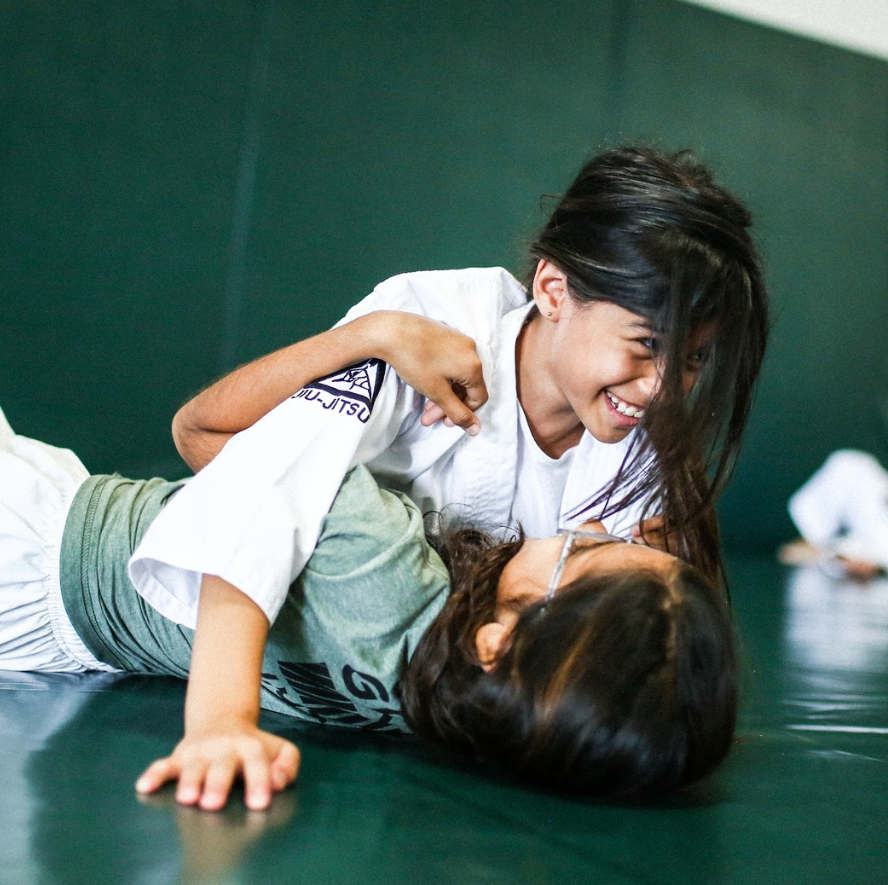
• Partner drills that develop timing and confidence
• Positional games that make learning feel fun and practical
• Cooldown and review, so kids leave with clarity
We also build in water breaks. It sounds small, but it matters. When kids know breaks are coming, attention improves and frustration drops.
Safety and supervision
Parents deserve a program that takes safety seriously. We maintain a clean training space and run structured drills so kids are not improvising chaos. Our instructors coach closely, pair students thoughtfully, and keep intensity appropriate for age and experience.
For beginners, the focus is fundamentals. Nobody is expected to “tough it out.” We would rather see a child learn the right habit slowly than rush through something and miss the point.
Starting young: what ages 3 to 5 really need
When kids start at 3 to 5, the training looks different than it does for older kids. At that age, the confidence win is often behavioral: listening, waiting, trying again after failing, and getting comfortable with a new environment.
We keep goals simple:
- Follow directions quickly and safely
- Learn basic body awareness like balance and posture
- Practice respectful contact and personal space
- Build a positive relationship with effort
Parents are sometimes surprised by how quickly young children adapt. The structure becomes familiar, and familiar environments are where confidence grows.
Skills that show up at school and at home
A good kids Jiu-Jitsu program should not be an isolated bubble. We want you to see the benefits in daily life, not only during class.
Here are a few outcomes families commonly notice:
- Better emotional regulation when something feels unfair
- More willingness to speak up and ask for help
- Improved focus during homework and chores
- Healthier responses to losing and winning
- Stronger posture and more assertive body language
We cannot promise a perfect month with zero bad days, because kids are kids. But when training becomes consistent, the trajectory often changes in a way parents can feel.
Fitness benefits without the “workout” battle
Not every child loves traditional sports conditioning. Jiu-Jitsu sneaks fitness into skill practice, and that is a big deal for long-term consistency.
Kids develop:
- Grip strength and core stability from controlling positions
- Mobility and coordination from ground movement
- Endurance from repeated drilling and games
- Body confidence from learning what their body can do
You will usually see a good kind of tired after class: sweaty, calm, and proud.
What to expect as a parent in the first month
If you are new to Jiu-Jitsu San Jose, CA, it helps to know what the early phase looks like. The first month is about establishing a routine and making training feel normal.
Here is a simple roadmap we recommend:
1. Start with a trial class so your child can experience the room, the pace, and the coaching style.
2. Choose a consistent weekly rhythm, because consistency beats intensity for kids.
3. Keep gear simple at first and focus on showing up prepared and on time.
4. Celebrate effort, not outcomes, especially when techniques feel tricky.
5. Check the class schedule page regularly so you can plan around school and family life.
If your child is shy, we will guide gently. If your child has endless energy, we will channel it. Either way, you are not expected to manage everything alone.
A program that grows with your family, including adults
Many families like the idea of training together, even if schedules vary. Our community supports a multi-generational approach where kids can build confidence and adults can pursue their own goals. If you have been curious about Adult Jiu-Jitsu San Jose, CA, training can be a powerful complement to what your child is learning: discipline, stress management, and practical self-defense.
When kids see parents committing to a learning process too, something clicks. Effort becomes normal in the household. Progress becomes shared language.
We keep the environment welcoming for all levels, whether you are stepping on the mats for the first time or returning after a long break.
How we keep progress visible (so confidence stays real)
Confidence fades when kids cannot tell if they are improving. We make progress visible through clear fundamentals, repetition, and coaching that highlights what your child did right, not only what needs fixing.
We also help kids set small goals that are reachable:
- Remember one technique detail per class
- Improve posture and base during drills
- Use a calm voice when partnering
- Finish a round without quitting
These wins add up quickly, and your child starts to trust the process. That trust is what builds lasting confidence, not just a temporary hype boost.
Ready to Begin
Building confidence fast is not about hype or pressure. It comes from learning practical skills, practicing them consistently, and realizing your child can stay calm in situations that used to feel overwhelming. That is what we work on every day, one class at a time.
If you want a kids program in San Jose that emphasizes anti-bullying awareness, structured training, and real progress you can see at home and at school, our team at Gracie Jiu-Jitsu San Jose is ready to help you get started with a clear plan and a supportive environment.
Strengthen both body and mindset through structured Jiu-Jitsu training at Gracie Jiu-Jitsu San Jose.