
The habits you build while solving problems under pressure on the mat can quietly reshape how you handle work, school, and family life in San Jose.
In a city that moves fast, it is easy to think success comes down to intensity: longer hours, tighter schedules, more hustle. We see something different every day in our Jiu-Jitsu classes. Progress usually comes from smaller, repeatable habits: showing up when you are tired, staying calm when something feels uncomfortable, and sticking with the process even when you do not get an immediate win.
That is what people mean when they talk about the Jiu-Jitsu mindset. It is not motivational talk. It is the practical mental skill of solving real problems in real time, then returning next class to do it again, a little better.
In San Jose, that transfer matters. The same skills you practice while learning to escape a tough position can show up later in a hard meeting, a tense conversation at home, or a stressful week of school deadlines.
What the Jiu-Jitsu mindset actually is (and how you train it)
When people hear “mindset,” it can sound vague. On the mat, it is specific. You are regularly put into situations where you have to breathe, think, and make decisions while your body wants to panic and rush. We coach you to slow that down: notice what is happening, choose a simple next step, and keep moving.
Over time, you start to build a mental habit loop:
• Recognize pressure without reacting emotionally
• Focus on one controllable action
• Adjust when the first plan does not work
• Learn from the outcome without getting stuck in it
That is the Jiu-Jitsu mindset in plain terms. You do not “get” it from reading about it. You get it from repetition, coaching, and safe, controlled practice.
Calm under pressure is a trained skill, not a personality trait
A lot of people assume calmness is something you either have or you do not. On the mat, we watch beginners learn it the same way they learn anything else: step by step. The first time you feel stuck under pressure, your brain sends a loud message that you need to escape immediately. With guidance, you learn that you can breathe, frame, make space, and work your way out without rushing.
That experience tends to carry into daily life in San Jose. You start noticing your own stress earlier. You get better at pausing before responding. And when things go sideways, you have practice staying present instead of spiraling.
Resilience grows through small “losses” you can learn from
One of the most useful parts of Jiu-Jitsu is that it gives you frequent feedback. Sometimes that feedback is that a technique did not work, your timing was off, or your partner had a better answer. Those moments are not failures in our room. They are information.
When you train consistently, you become more comfortable being a beginner at something, and that is a big deal. It makes it easier to try new things at work, return to a project after a mistake, or have a tough conversation without needing everything to feel perfect first.
Why this mindset fits San Jose life so well
San Jose has its own rhythm: long workdays, commutes that eat time, packed school calendars, and the constant pressure to be productive. People are capable here, but capable people still get stressed. Jiu-Jitsu gives you a scheduled place to practice focus and composure, not as a concept, but as an action.
We also like that the training is honest. If your attention wanders, you feel it right away. If you try to force things, you get tired fast. If you stay calm and work step by step, you last longer and learn more. That is a pretty accurate mirror of life.
Focus: learning to stay on the task in front of you
In Jiu-Jitsu, multitasking does not work. You cannot think about five things at once and move efficiently. You learn to narrow your attention: grip, posture, base, angle. One decision at a time. That focus is a mental muscle, and it gets stronger with practice.
Off the mat, that can look like:
- finishing a work task without constantly switching windows
- studying with more consistency
- handling family responsibilities with less irritability because you are not mentally scattered
Problem-solving: pressure makes you simplify
A common beginner mistake is trying to remember everything. We coach you to simplify. If you are pinned, you do not need fifteen options. You need one reliable sequence: create a frame, recover guard, or build to your knees. When you stop chasing the perfect answer and commit to a clean next step, you improve quickly.
That problem-solving style is useful in everyday stress. When your schedule breaks or a plan changes, you get better at asking: “What is the next best move I can actually do right now?”
How we build mindset inside our training structure
Mindset is not separate from technique. It is baked into how we teach, how we pace classes, and how we help you measure progress. You will hear us repeat fundamentals because fundamentals are what show up when you are tired and under pressure.
What you can expect in a typical class
Most classes follow a rhythm that keeps things approachable while still challenging you:
1. A warm-up that supports movement patterns you will use in training
2. Technique instruction with clear details and why the detail matters
3. Drilling with a partner so you get real repetition
4. Positional practice or controlled sparring depending on the class and level
5. A quick wrap-up so you leave with one or two key takeaways
That structure does something important: it teaches you to learn under light stress first, then gradually increase intensity as your skills and confidence grow.
Community support matters more than people think
Jiu-Jitsu can be humbling, especially early on. Having a room where you feel safe learning makes a difference. We make a point to keep our environment respectful and beginner-friendly, because consistent training is what changes you, not one “perfect” day.
You will also notice something subtle: training partners become a kind of accountability system. When you know people expect to see you, showing up gets easier.
Jiu-Jitsu mindset for San Jose professionals: composure, confidence, and better decisions
A lot of adults come to us because they want something real: a challenging workout, practical self-defense, and a way to clear their head. The mindset benefits are often the surprise.
Handling tense moments without escalating
In Jiu-Jitsu, you learn to control intensity. You cannot go from zero to one hundred every round and expect to learn. You practice staying steady. That carries into professional life. When tension rises in a meeting or a project hits a snag, you have experience regulating yourself first, then responding.
Confidence that comes from competence
We are careful with the word “confidence.” We do not mean hype. We mean the quiet confidence that comes from learning skills, testing them safely, and watching yourself improve over time. When you know you can handle hard things physically, you often stop overreacting to smaller stressors mentally.
A better relationship with discomfort
Growth requires discomfort. Jiu-Jitsu gives you a structured place to face it, manage it, and come out the other side. That can make everyday challenges feel more workable: the hard email, the difficult feedback, the new role, the uncomfortable but necessary boundary.
Youth Jiu-Jitsu and family life: confidence, discipline, and emotional control
For parents, the “mindset” conversation becomes very practical. Kids deal with pressure too: school expectations, social dynamics, and the emotional ups and downs of growing up. Our youth program uses Jiu-Jitsu to teach skills that show up in daily behavior, not just on the mat.
What kids learn that helps at school and at home
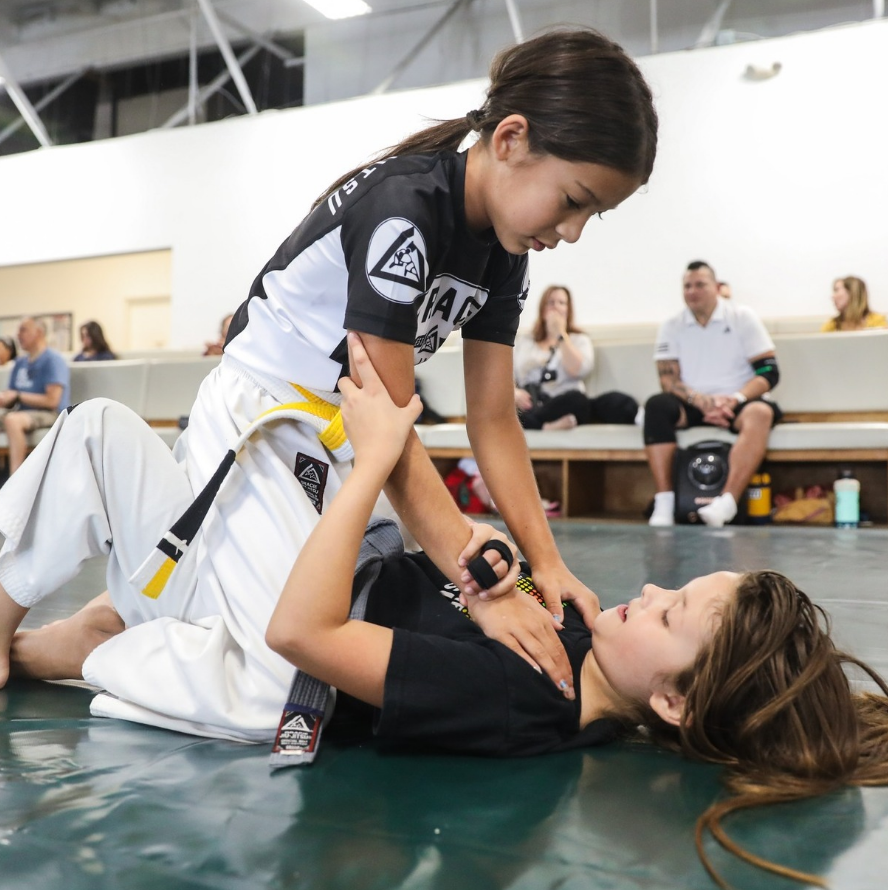
In Youth Jiu-Jitsu San Jose, CA, we emphasize character development alongside technique. Kids learn how to listen, follow directions, and stay engaged even when something is hard. That matters for homework, classroom focus, and family routines.
Here are a few mindset skills we intentionally reinforce:
• Patience: waiting for the right moment instead of rushing
• Respect: treating coaches and training partners with attention and care
• Accountability: owning mistakes and trying again without excuses
• Emotional regulation: breathing and resetting when frustrated
• Consistency: improving through attendance, not quick fixes
These skills are teachable, and martial arts training gives kids a clear way to practice them.
Social confidence without aggression
Jiu-Jitsu is not about bullying or dominating. We teach control, awareness, and responsibility. Kids learn what it feels like to work with partners of different sizes and skill levels, and they learn that strength without control is not the goal. Over time, that tends to build a calmer kind of confidence, the kind that does not need to prove itself.
Getting started with Jiu-Jitsu in San Jose, CA (beginner reassurance)
If you are curious but unsure, you are not alone. Many people assume they need to be in shape first, or that everyone will be experienced, or that they will not “get it.” We build our beginner experience to remove those barriers.
What to wear and what to bring
If you have a gi, bring it. If you do not, we will help you understand what is appropriate for your first class. The main goal is simple: wear something you can move in, keep it clean, and show up ready to learn.
How often you should train to feel real progress
Consistency beats intensity. For most adults and kids, a steady schedule of 2 to 3 classes per week is enough to build momentum. More can be great, but we would rather see you train sustainably than go hard for two weeks and disappear for two months.
Membership options and fitting training into a real schedule
San Jose life is busy, so we keep our membership options practical and our class schedule clear on the website. Whether you are training solo, bringing your child, or making it a family routine, we will help you choose a plan that supports consistency. When in doubt, start simple, then adjust after you learn what your week actually allows.
The mindset transfer: how to take Jiu-Jitsu off the mat on purpose
One of the best ways to make training “stick” in daily life is to connect it to a few repeatable habits. We encourage students to do this intentionally, because the benefits multiply when you notice them.
Try these three simple carryovers:
• Use breathing as a reset: if you can breathe under pressure on the mat, you can do it before responding to stress at home or work.
• Choose a next step: when life feels messy, pick one small action you can complete, then build from there.
• Track consistency, not perfection: measure progress by attendance and effort, not by winning every moment.
Jiu-Jitsu San Jose, CA is full of driven people. The ones who thrive long-term are usually the ones who stay steady, keep learning, and show up even when it is not convenient. That is exactly what training teaches.
Take the Next Step
Building a stronger Jiu-Jitsu mindset is not about becoming someone new overnight. It is about stacking small wins: learning to stay calm, think clearly, and keep going when things feel difficult. When you train with us, you are practicing those skills every week in a setting designed to be challenging, safe, and genuinely supportive.
If you want to experience that process firsthand, we have built our programs at Gracie Jiu-Jitsu San Jose to be accessible for beginners, welcoming for families, and practical for real life in San Jose.
Take what you learned here to the mat by joining a Jiu-Jitsu class at Gracie Jiu-Jitsu San Jose.