
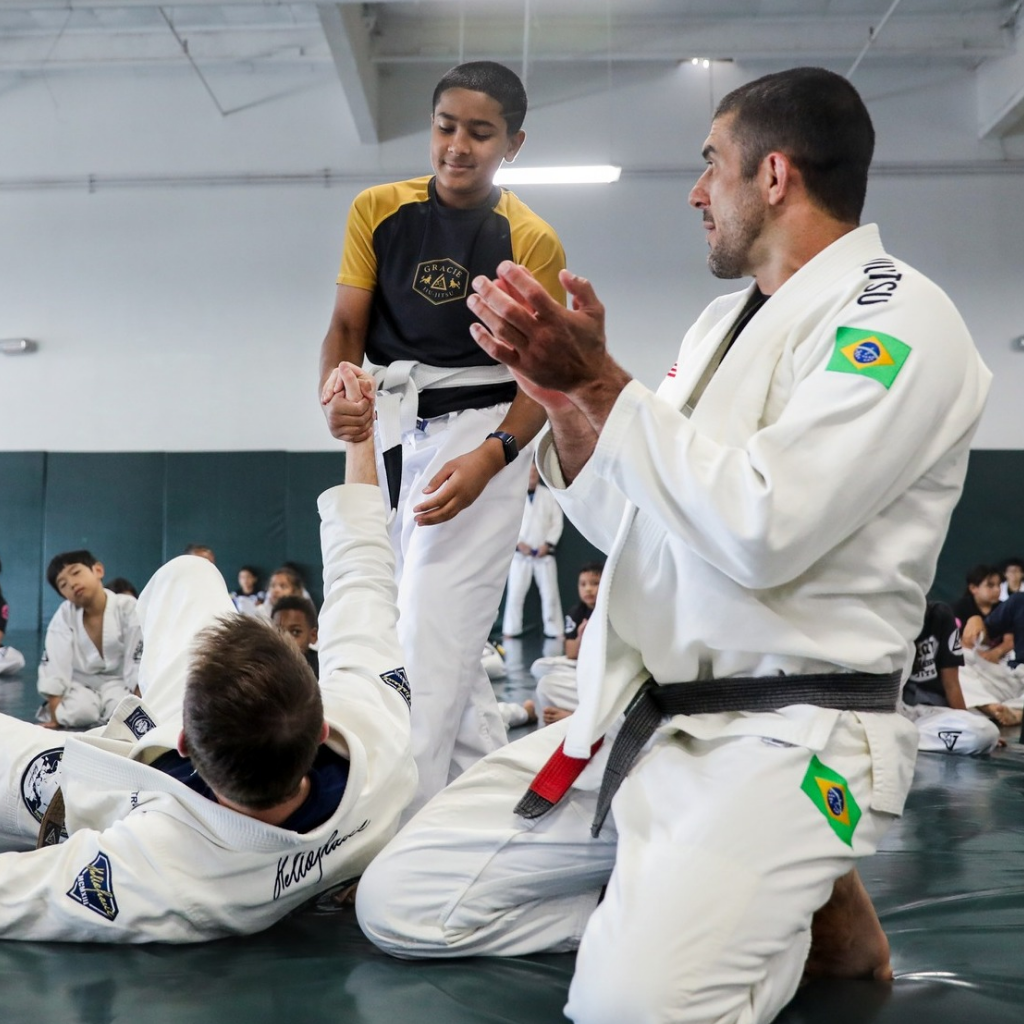
The fastest self-defense gains come from a few high-percentage movements you can practice safely and repeatably.
Most people start Jiu-Jitsu because they want real self-defense, not a collection of flashy techniques they will forget under stress. That is exactly why we teach a structured set of fundamentals that work for everyday adults in San Jose, CA, including people who have never trained before and do not consider themselves athletic.
If your goal is fast, practical progress, the secret is not doing more moves. It is doing the right moves, with the right safety habits, and repeating them until your body can do them even when your heart rate spikes. In our beginner curriculum, we focus on reliable entries, positional control, and escapes that reduce the chances of taking damage, especially from punches.
In this guide, we will walk you through beginner-friendly Jiu-Jitsu movements you can master quickly, explain why each one matters, and show you how our class structure helps you build usable self-defense skill without needing to jump into sparring right away.
Why our beginner-first Jiu-Jitsu approach works for self-defense in San Jose, CA
When self-defense is the priority, we cannot treat training like a random grab bag of techniques. We keep things organized so you always know what you are learning, why you are learning it, and how it fits into a real situation. Our beginner program is built around a core set of techniques designed to be learned cooperatively, with clear goals and measurable progress.
We also train with a simple assumption: your safety comes first. That means we spend a lot of time on distance management, clinching without “eating punches,” protecting your head during transitions, and escaping bad positions efficiently. Those details sound small, but in a real altercation, they are the difference between getting out and getting hurt.
If you are looking specifically for Adult Jiu-Jitsu San Jose, CA options, this structure matters even more. Adult bodies have jobs, schedules, old injuries, and a limited appetite for chaos. We build skill without requiring you to “prove toughness” on day one.
The core idea: win the position first, then finish if needed
In sport settings, people sometimes hunt submissions from anywhere. For self-defense, we prefer a calmer order of operations: stabilize, escape danger, then control. Submissions can be useful, but only after you have reduced immediate threats and established a position where you can think.
That is why you will see so much attention on dominant positions like mount control and back control, plus practical escapes like the bridge-and-roll and the shrimp escape. These are not trendy. They are dependable, and they show up again and again in real-world scenarios.
A good way to think about our training is this: Jiu-Jitsu is a decision-making tool under pressure. The movements are physical, sure, but the bigger win is knowing what to do next.
Fast-mastery move 1: clinch entry with head and arm safety
Most untrained confrontations start standing, at awkward range, with hands flying. We teach clinch entries that prioritize protecting your face and closing distance safely. The goal is not to trade punches. The goal is to connect, control posture, and guide the situation toward a takedown or a disengagement.
The beginner lesson here is simple: if you can get to a strong clinch without absorbing strikes, you have already improved your odds dramatically. From there, you can use off-balancing and body positioning to bring the fight to the ground on your terms.
Even if you never “fight,” this skill has everyday value. It teaches you how to manage space, how to keep your chin safe, and how to stay stable if someone crowds you or shoves you.
Fast-mastery move 2: the body fold takedown to a safer top position
One of the highest-value beginner takedowns we teach is a body fold style takedown that brings you down with control and aims to land in a dominant position. In self-defense, we like takedowns that do not require perfect timing, do not demand explosive athleticism, and do not put your head in a risky place.
The body fold concept is about controlling the hips and posture, then using leverage to fold the opponent’s upper body while you keep your base. When done correctly, it is surprisingly efficient. It feels less like “throwing” and more like guiding someone into a position where you can stabilize.
Once you land, you are not done. We immediately connect this takedown to top control habits that reduce the risk of getting bucked off, grabbed, or hit.
Fast-mastery move 3: mount control that actually keeps you safe
Mount is a powerful position, but only if you know how to stay heavy, balanced, and protected. Beginners often sit tall and get rolled. Or you might lean forward carelessly and leave your head exposed. Our mount control basics include posture, hip placement, and what we call “stay connected” pressure so you are not floating.
We also teach a body fold style mount entry that helps minimize the chance of taking strikes during the transition. The principle is to smother the space, keep your head protected, and settle your weight before you start thinking about finishes.
Mount control is also a confidence-builder. When you feel what it is like to stabilize on top without panic, your whole approach changes. You stop rushing, and your decisions get cleaner.
Fast-mastery move 4: the bridge-and-roll escape from the worst spot
If you are under mount, you need a plan that works when you feel pinned. The bridge-and-roll escape is one of the first escapes we teach because it is direct, mechanical, and effective when you follow the steps precisely.
The key is not the bridge by itself. The key is the trap. You trap an arm so it cannot post, trap a leg so the base is compromised, then bridge and roll as a unit. If you skip the trap, you will probably just burn energy and go nowhere, which is a rough feeling.
We coach the escape as a sequence: protect your face, get the trap, bridge with intention, and come up to a safer position. When you drill it a few times with good partners, you start to feel the timing, and that is when it becomes real.
Fast-mastery move 5: the shrimp escape to create space and recover guard
Shrimping is one of those unglamorous Jiu-Jitsu movements that quietly changes everything. It teaches you how to move your hips away while using frames to protect your head and neck. That combination, frames plus hip movement, is the foundation of many escapes.
In self-defense terms, the shrimp escape helps you avoid being flattened, helps you recover a defensive position, and gives you space to stand up or reset. The concept is not to “push” someone off you with raw strength. It is to create a wedge, move your hips out, and reinsert your legs as a barrier.
This is also why our beginner training spends time on details like elbow placement and head position. A shrimp escape is easy to do wrong, and a clean version is a totally different experience.
Fast-mastery move 6: standing up safely, because leaving matters
Not every self-defense moment ends with a submission. Often, the best outcome is getting up and leaving. We teach practical stand-up mechanics from the ground so you can disengage while protecting your head and maintaining distance.
Standing up safely is not just “get to your feet.” It is a sequence: create space, post in the right place, keep your eyes up, and stand without turning your back carelessly. In a city environment, that awareness matters. Surfaces are hard, spaces are tight, and you want an exit, not a prolonged scramble.
This part of training is especially popular with beginners because it feels immediately applicable. You can picture it, drill it, and understand the purpose in about five minutes.
Fast-mastery move 7: back control basics and a simple triangle setup
Back control is one of the safest dominant positions because you are not in front of someone’s hands. We teach how to stay attached, control the shoulders, and use your hooks and seatbelt grip properly so you do not get shaken off.
From there, we introduce simple submission pathways that rely more on position and patience than brute force. One example we cover is a triangle setup concept from back control mechanics, using hand control and leg positioning to create a tight finish when the moment is right. We also talk about fatigue and compliance, meaning the more you control without rushing, the more openings appear.
Even if you never intend to “finish” someone, understanding these mechanics makes your control better. And better control is the heart of self-defense Jiu-Jitsu.
What you will learn first in our beginner curriculum
We keep our beginner path focused, and we like to be upfront about what you will actually do in class. Here are the categories we build early so you can progress fast without feeling scattered:
• Standing entries and clinch control that reduce striking risk and help you close distance safely
• Takedowns that favor leverage and balance so you can land in a stable top position
• Mount control habits that keep your base strong and your head protected
• Core escapes like bridge-and-roll and shrimping so you can get out from under pressure
• Guard recovery and basic control positions that let you pause, breathe, and make decisions
• Back control fundamentals and simple submissions that build from position, not speed
If you stay consistent, these pieces start linking together. That is the moment when Jiu-Jitsu stops feeling like separate moves and starts feeling like a system.
How our class structure helps you master these moves faster
We do not throw you into the deep end. Our beginner program is designed around a core set of 36 techniques, taught with cooperative drilling and clear progress markers, and we typically see students build solid proficiency over about 8 to 12 months before moving on to more advanced training.
We also make it easier to review outside the mat. Between structured lesson cycles and video-based review, you are not relying on memory alone. That matters, because most adults learn best when they can revisit details and show up with a plan for what to improve.
To keep things simple, here is how we recommend approaching your first months so you feel steady instead of overwhelmed:
1. Train consistently on a realistic schedule, even if it is just a few classes per week
2. Focus on survival first, especially escapes and posture, before worrying about submissions
3. Ask for one correction at a time so your improvement stays measurable
4. Review the techniques you covered in class so the next session feels familiar
5. Track a few “wins” like cleaner traps, better frames, or calmer breathing under pressure
This is how fast progress actually looks. It is not dramatic. It is repeatable, and it works.
Common beginner questions about Jiu-Jitsu San Jose, CA training
People often ask whether you need to be in shape before starting. You do not. Training is what gets you in shape, and we scale intensity so you can build up safely. Another frequent concern is fear of injury. Our cooperative approach, clear rules, and emphasis on fundamentals reduce unnecessary risk, especially early on.
You might also wonder if you will need to spar immediately. In our beginner phase, we focus on technique development and controlled drilling so you can build real skill before adding that layer. That approach is one reason adults stick with the program. It feels challenging, but not chaotic.
And yes, you will sweat. You will probably surprise yourself, too, especially the first time an escape works exactly the way it was supposed to.
Ready to Begin
If you want self-defense that feels practical quickly, you do not need hundreds of moves, you need a smart sequence of fundamentals and the reps to make them automatic. That is exactly what we teach, and it is why so many beginners in San Jose commit to this style of training.
When you are ready to build real confidence through Adult Jiu-Jitsu San Jose, CA classes, we will guide you through the essentials step by step, with a curriculum built around the situations that matter most. Gracie Jiu-Jitsu San Jose is where you can turn these “anyone can master” moves into skills you can actually use.
Train with purpose and see real improvement by joining a Jiu-Jitsu class at Gracie Jiu-Jitsu San Jose.